
Last updated November 4, 2026
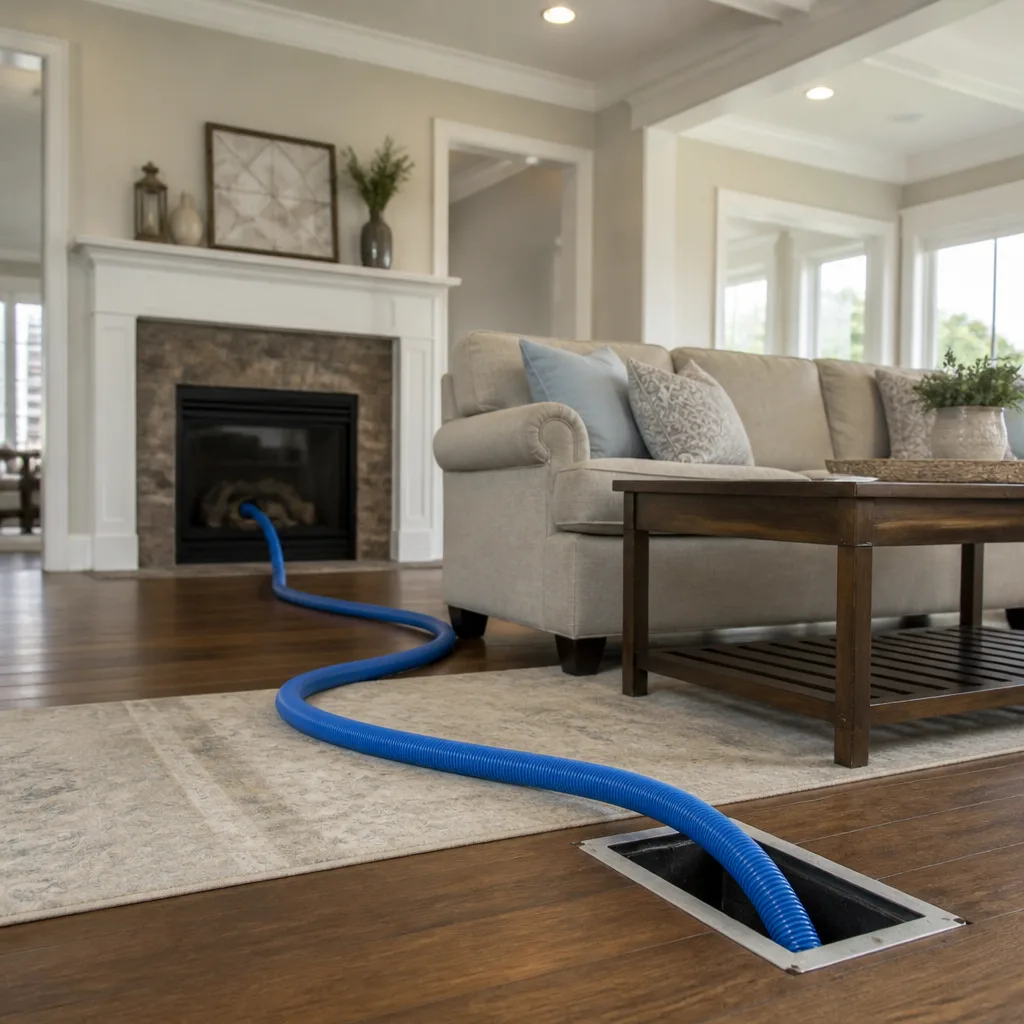 Whole-home duct cleaning
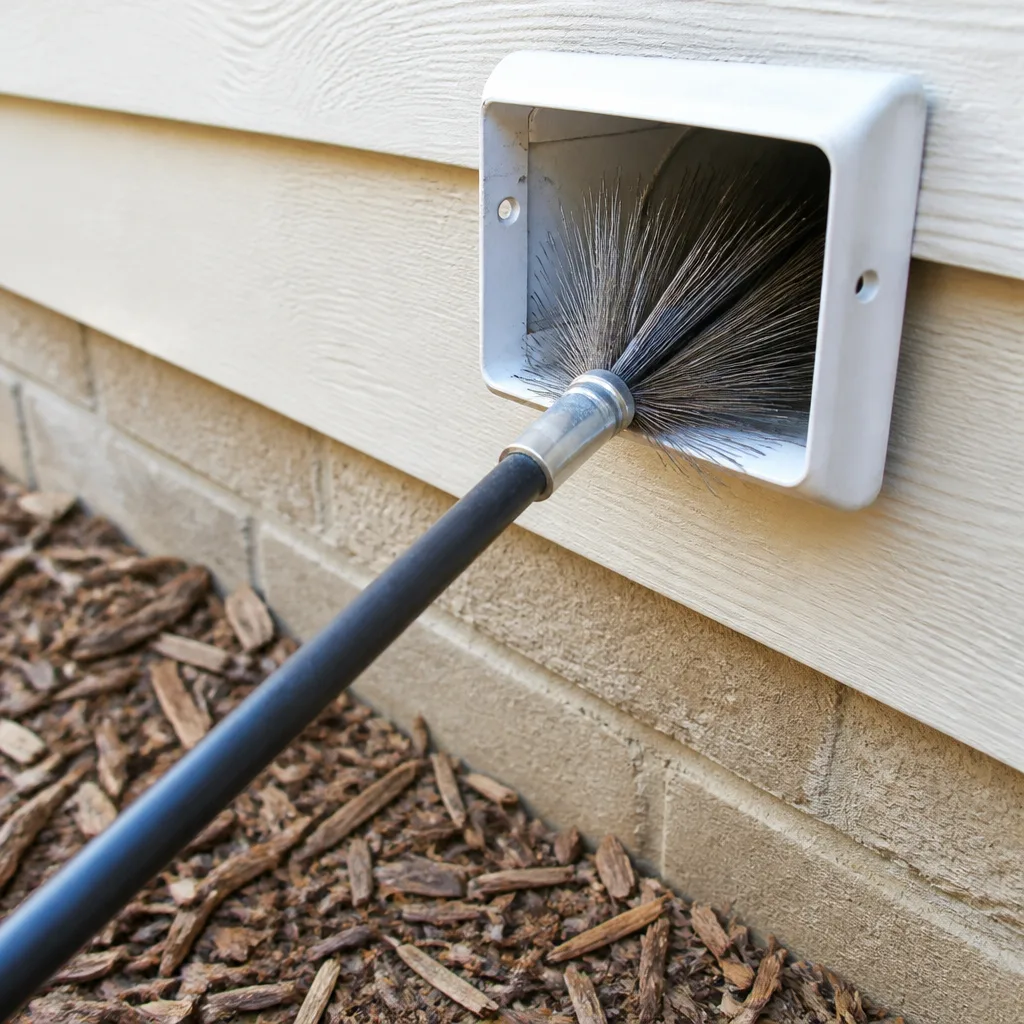 Dryer vent cleaning
 Camera inspection
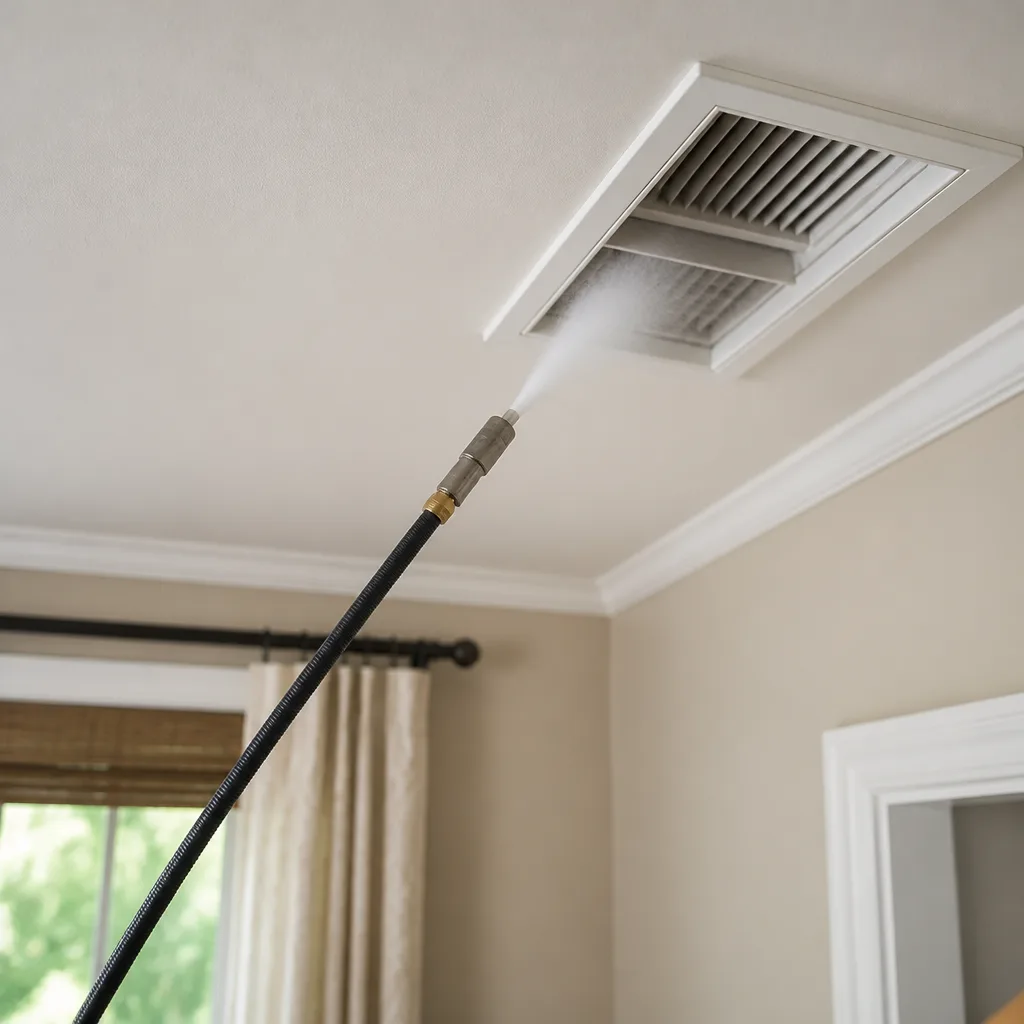 Sanitizing & deodorizing
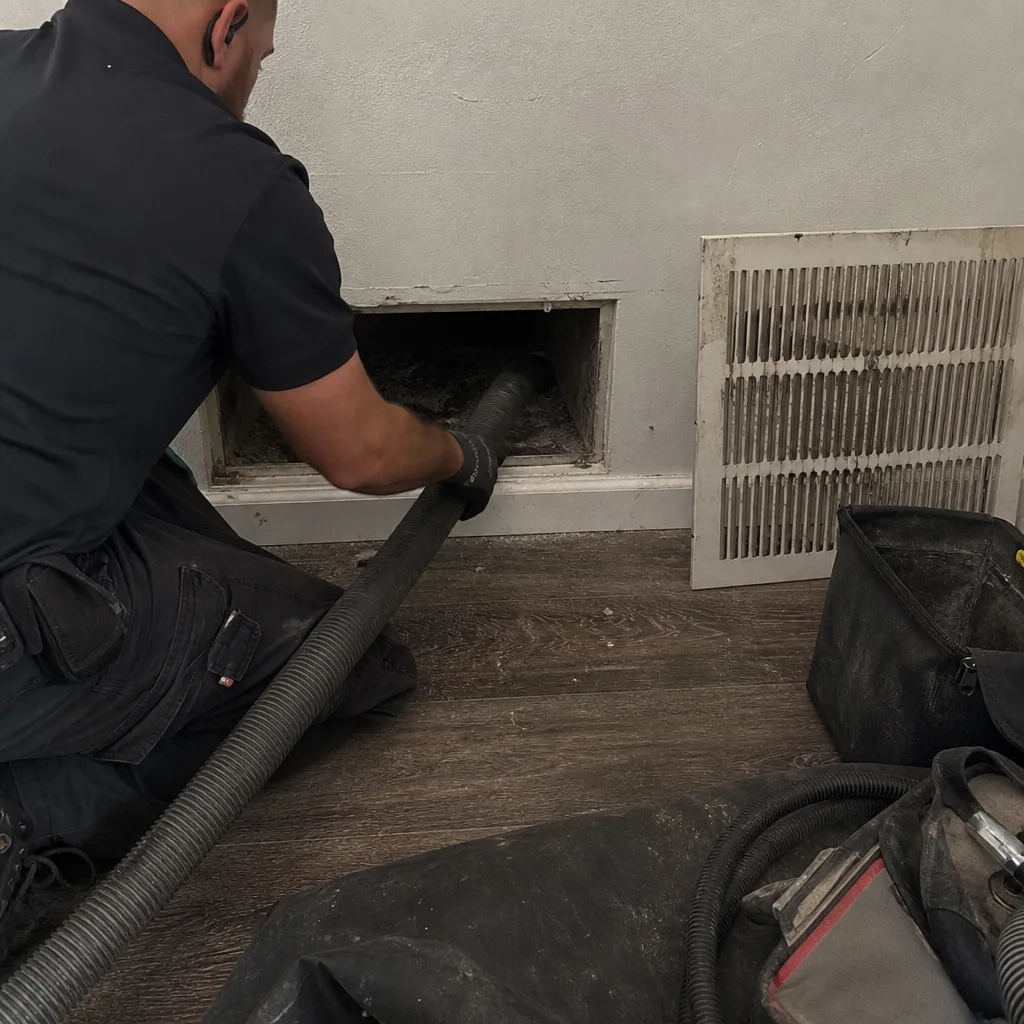
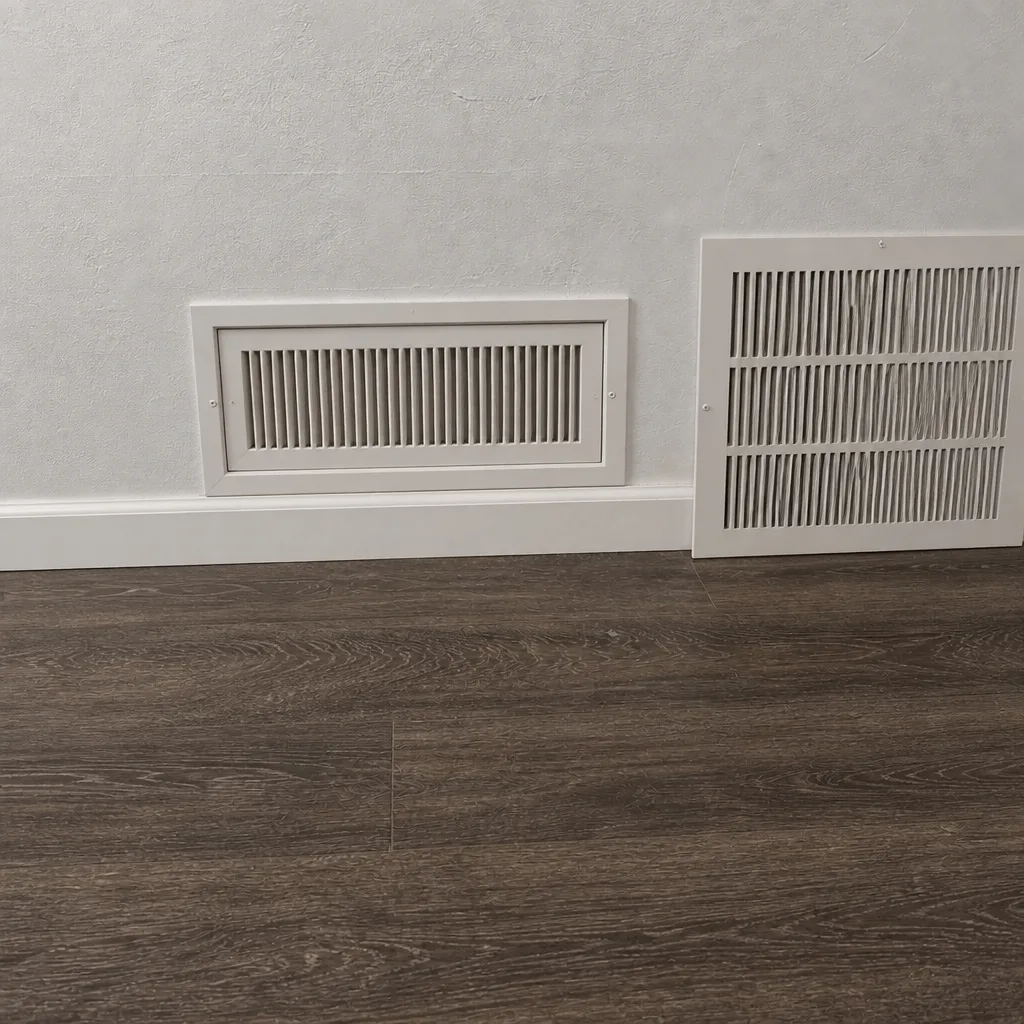
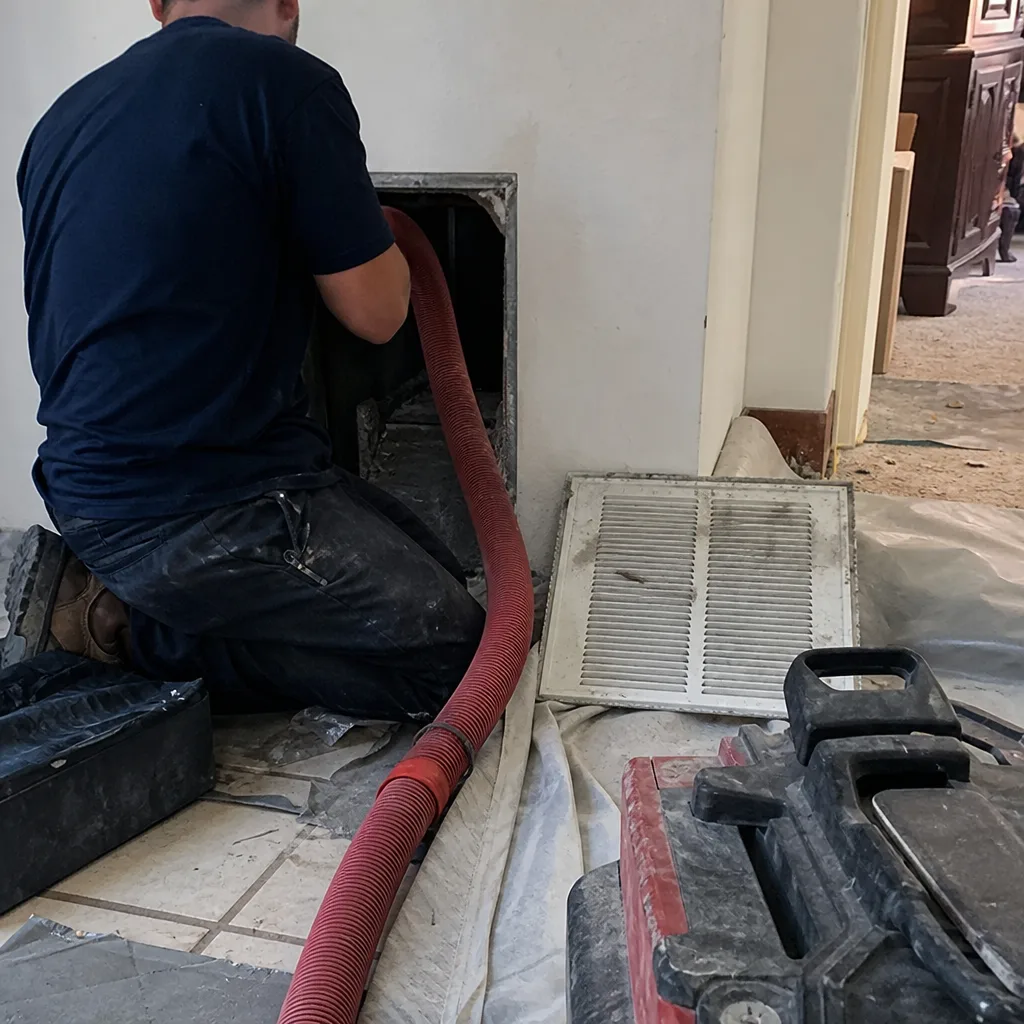
Whole-system duct and dryer vent check with before-and-after photos - you see exactly what came out of your vents
That "$99 whole-house special" is a bait ad - the real number appears once they are in your hallway, or the "clean" is a shop-vac at the register. We photograph the inside of your ducts before and after instead.
Air Duct Cleaning Troubleshooting in Aliso Viejo: Common Problems and How to Fix Them
Here’s what surprises most Aliso Viejo homeowners: if a full duct cleaning didn’t fix your musty smell, weak airflow, or that one room that never gets comfortable, the cleaning usually wasn’t the problem. The diagnosis was. We’ve spent enough time inside Aliso Viejo attics and return plenums to know that maybe a third of the callbacks after a cleaning trace to something upstream the vacuum never touched: a collapsed flex duct, a breached return, or a fouled coil housing. This guide walks through how to read the symptoms before you spend another dollar, so you know whether you need another cleaning, a repair, or a different fix entirely.
Styles & brands we work with
- Whole-home duct cleaning
- Dryer vent cleaning
- Camera inspection
- Sanitizing & deodorizing
Quick Answer
Most duct-cleaning problems in Aliso Viejo fall into two categories: gradual, whole-house symptoms (dust, allergies, rising energy bills) that usually mean the ducts are dirty, and sudden, room-specific symptoms (one hot room, a new musty smell in one hallway, whistling at one register) that almost always mean a structural or mechanical failure in the duct system. Dirty ducts respond to professional cleaning. Structural failures need repair first, or the cleaning won’t hold. The fix depends on which symptom pattern you’re seeing, not on how recently someone ran a brush through the system.
Table of Contents
- How to Tell a Dirty Duct from a Damaged Duct
- The Aliso Viejo-Specific Problem: Attic Flex Duct and Humidity
- Why That Musty Smell Comes Back After Cleaning
- Collapsed or Kinked Flex Duct: Spotting It Without Cutting Ceilings
- Your Post-Cleaning Verification Checklist
- Why Repair Sometimes Has to Come Before a Second Cleaning
- Common Mistakes to Avoid
- When to Call a Professional
- Frequently Asked Questions
- The Bottom Line
How to Tell a Dirty Duct from a Damaged Duct
The single most useful skill in duct troubleshooting is separating “dirty” from “damaged,” because they need different fixes and different tooling. Here’s the pattern we use when a homeowner in Aliso Viejo calls us out for a second opinion.
Dirty-duct symptoms are gradual and whole-house. You notice more dust on furniture than you used to, across most rooms. Allergy symptoms tick up at home but not at work. Energy bills creep up summer over summer. Air still moves from every register, just weakly. Nothing changed overnight. That pattern says the duct system has accumulated a general contaminant load: dust, pet dander, construction debris, maybe pollen pulled in through a leaky return.
Structural symptoms are sudden and room-specific. One bedroom stops cooling while the hallway stays fine. A musty smell appears in one wing of the house and never leaves. You hear a whistling or flapping noise from one register. The airflow in one room feels like a whisper while the next room is normal. When you feel a sudden, localized change, that’s not dirt. Dirt doesn’t make rooms go dead overnight. Something came apart, kinked, or collapsed.
Run a quick register temperature and airflow check. Hold your hand near each supply register on a hot afternoon when the air conditioning is running. Mark which rooms feel weak. Press a tissue against the register grille and see if it holds or drops. Note the temperature difference between the air coming out of the strongest register and the weakest one. A spread of more than a couple of degrees across rooms on the same floor often points to a duct leak pulling attic air into one run, or a crushed flex run starving one branch. That’s a repair signal, not a cleaning signal.
We see this a lot with older Aliso Viejo homes in tracts like Westridge or Glenwood, where original flex duct from the 1990s and early 2000s is reaching the end of its service life. The inner liner degrades, the insulation jacket tears, and gravity does the rest. A competent air duct cleaning will remove what’s inside the duct. It cannot un-collapse a duct that has physically failed.
The Aliso Viejo-Specific Problem: Attic Flex Duct and Humidity
Aliso Viejo sits in a specific microclimate band: close enough to the Pacific that humidity creeps up at night, warm enough that attics bake during the day, and far enough inland that the air doesn’t rinse itself clean the way it does right at the beach. That combination is hard on flex duct.
Here’s what happens mechanically. Flex duct is a spiral wire coil wrapped in fiberglass insulation and a foil or plastic vapor jacket. During the day, your attic can reach 130°F or hotter. Warm air holds moisture, and that moisture presses against the outer jacket of the duct. At night, the attic cools and the water vapor condenses. If the outer jacket has any nick, tear, or taped seam failure, moisture wicks into the insulation layer. Now you have damp fiberglass in a dark, warm space. That’s a microbial growth environment. And it happens inside the duct system, not in the living space, so you don’t see it until the smell starts moving through the registers.
The frustrating part for homeowners: a cleaning removes the growth that’s already there, but if the duct jacket isn’t repaired or the torn section replaced, the humidity re-enters the insulation and the odor comes back within weeks. This is the single most common reason we hear “I had the ducts cleaned and the smell came back” in Aliso Viejo. The cleaning worked. The duct leaked.
There’s a simple check for the humid-attic problem. Walk your attic in the early morning. Look at the flex duct. If you see condensation beading on the foil jacket, dark staining on the insulation, or sagging sections between supports, the system is fighting Aliso Viejo humidity and losing. The fix is sealing and re-supporting the duct, or replacing the failed run, then cleaning. The order matters. Seal first, clean second. That’s the sequence the problem demands.
Why That Musty Smell Comes Back After Cleaning
If you had the ducts cleaned and a musty smell returned within a month, the odds are very high the odor was never in the duct runs to begin with. In our experience, the top three sources of a persistent post-cleaning musty odor are the evaporator coil housing, the condensate drain pan, and the supply plenum. Here’s how to think through each one.
The evaporator coil housing. Your cooling coil sits in the air handler, usually in a closet, attic, or garage in Aliso Viejo homes. In cooling season, the coil is cold and wet. Dust that bypasses the filter sticks to the wet coil, and organic matter plus moisture plus warmth equals microbial growth. A duct cleaning that only addresses the runs and never opens the coil housing will leave the odor source untouched. Ask any technician who comes out this question: “Will you inspect and clean the evaporator coil housing and drain pan as part of this?” If the answer is vague, get a different technician.
The condensate drain pan. The pan under the coil catches condensation. If it’s not sloped correctly or the drain line is partially clogged, water sits. Standing water in a dark cabinet grows biofilm, and the air handler fan blows that smell through the house every time it runs. Sometimes the fix is as simple as clearing the drain line and treating the pan. Sometimes the pan itself needs replacement. But you can’t know until someone opens the air handler and looks.
The supply plenum. The plenum is the transition box where the air handler connects to the duct trunks. If the return side has a leak in the attic, the system pulls attic air into the airflow. If the supply plenum is leaking, conditioned air escapes. Both create pressure imbalances that can pull smells from the attic into the house. A breached return plenum in an Aliso Viejo attic is one of the most under-diagnosed IAQ problems we see. The attic is where rodents, dust, and fiberglass live. If the return is pulling from that space, you’re breathing it.
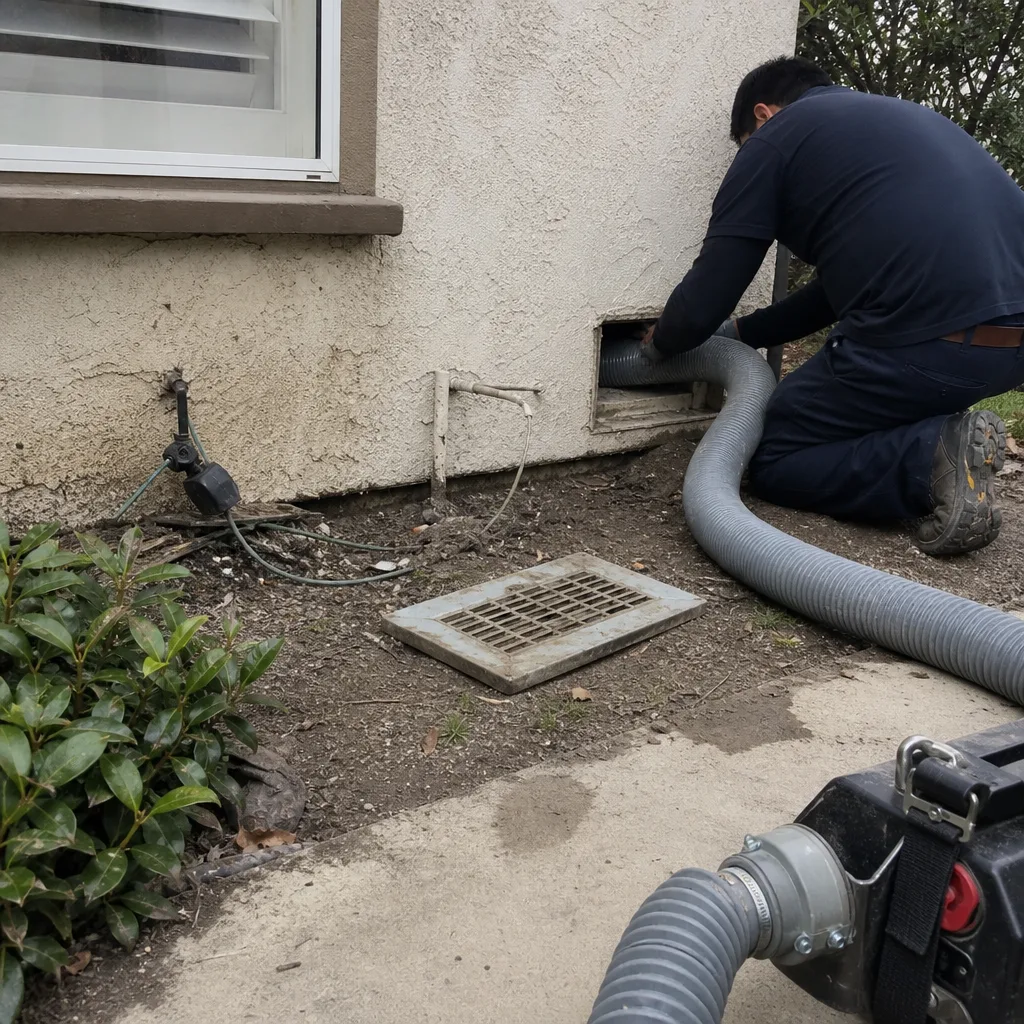
Our process handles this differently. When we run a Duct Cleaning Aliso Viejo visit, we don’t only address the runs. We use Rotobrush equipment for mechanical agitation inside the ducts and Nikro negative-air equipment to pull the dislodged material into a contained capture system. Abatement Technologies containment units keep what we dislodge from re-entering the living space. And because we carry the repair scope too, a breached plenum or a torn duct jacket doesn’t end the visit with a shrug and a referral. It ends with a fix.
Collapsed or Kinked Flex Duct: Spotting It Without Cutting Ceilings
Flex duct fails in predictable ways. The most common failure in Aliso Viejo attics is a collapsed or kinked run, and you can often identify it from the living space without cutting a single hole. Here’s a step-by-step diagnostic we teach homeowners.
- Map your registers. Go room to room with a notepad or your phone. For each supply register, note whether airflow feels strong, moderate, weak, or absent. Aliso Viejo homes tend to have one or two problem rooms if flex duct is failing, not a whole-house problem.
- Check the weak rooms first. A collapsed flex run almost always serves a room at the end of a duct branch. Bedrooms over garages, rooms at the far end of a hallway, or upstairs rooms at the end of a long attic run are prime candidates.
- Listen. With the system running, stand near the weak register. A kinked duct often produces a higher-pitched whistle or a soft flutter. Collapsed duct sometimes makes a low moan or rumble as the blower pushes against the obstruction.
- Look at the register itself. Remove the grille (a screwdriver is usually all it takes) and look into the boot. If the inside is clean but barely any air moves, the obstruction is upstream. If the boot is dirty and airflow is strong, the run is probably fine.
- Trace the attic run. If you’re comfortable in the attic, follow the flex from the trunk line to the weak room. Look for sharp bends, pinches where the duct passes over a truss or under a pipe, sagging stretches longer than four feet between supports, or visible kinks where the inner liner folds. A crushed section often feels softer than the surrounding duct when gently squeezed.
- Measure the static pressure at the grille. A technician with a manometer can read airflow pressure at the register. A markedly lower reading on one branch confirms the restriction. This is the professional verification step if the visual checks are inconclusive.
When a run is collapsed or kinked beyond saving, the fix is removing the failed section and re-running it, properly supported and sealed. That’s repair work, not cleaning. If you’ve had a cleaning and the same room is still dead, the problem was never dirt. A second cleaning will produce the same result. Repair first, then clean the system so the new run starts contaminant-free.
Your Post-Cleaning Verification Checklist
A professional cleaning that runs Rotobrush and Nikro equipment with Abatement Technologies containment leaves behind a system that should be measurably cleaner and moving air properly. Here’s what you can verify yourself after the crew leaves, and what needs a camera scope.
What you can verify yourself:
- Register airflow balance. Walk every room with the system fan running. Each supply register should push air with roughly consistent force. Bedrooms and bathrooms may be slightly lower by design, but no room should feel dramatically weak. If one room still falls short, ask the technician to camera-scope that branch before the visit ends.
- Filter bypass gaps. Open the filter access. The filter should sit flush in its slot with no gaps around the edges. A gap lets unfiltered air bypass the filter entirely and re-contaminate the coil and ducts. This is a 30-second check.
- Visible mold at supply boots. Remove a few supply grilles and look at the metal or plastic boot behind the grille. You should see clean surfaces. Any dark staining, fuzzy growth, or visible dust caked on the boot walls after a cleaning is a problem to flag. The boots are the last thing air passes through before entering the room.
- Dust settling test. After cleaning, dust a horizontal surface in the main living area and leave it for 48-72 hours. Some dust is normal in any lived-in home, but if the surface develops a visible gray film much faster than before, ask whether the return side was properly included in the cleaning. A return-side leak or a missed return drop will keep feeding dust into the system.
What needs a camera scope:
- Internal duct condition. A push camera through each main trunk and branch run shows whether the mechanical agitation removed the buildup or whether there’s still a mat of debris lining the duct. Reputable cleaners should be willing to show before-and-after footage.
- Plenum integrity. The return and supply plenums are metal boxes in the attic or garage. A camera can check for gaps, rust, or failed tape at the seams. You can’t see these from inside the house.
- Coil housing interior. If the musty smell persists, a camera or borescope into the coil housing shows whether the coil and drain pan were properly addressed or whether the growth is still there.
We’re direct about this during our own visits: healthy air starts in the ductwork, and you should be able to see the evidence of the work. That’s why before-and-after photos of the actual ducts are part of our process, not an upsell.
Why Repair Sometimes Has to Come Before a Second Cleaning
There’s a logical sequence to duct remediation that gets skipped more often than it should. The sequence is: make the system tight, then clean it. Here’s the reasoning.
If the return side has a breach in the attic, the system is pulling attic air into the ductwork continuously. You can clean the ducts on Monday and by Friday the system is pulling dust and fiberglass from the attic again. The cleaning didn’t fail. The duct is just refilling itself. Same logic applies to a torn flex jacket in a humid Aliso Viejo attic. The moisture re-enters the insulation, growth re-establishes, and the odor returns. Clean ducts are only half the job. Intact ducts are the other half.
This is why we carry air duct repair as a core part of the service scope. Many duct cleaners only clean. When they find a breached plenum or a collapsed run, they can’t fix it, so the homeowner gets a cleaned system that re-contaminates and then has to find a second company to do the repair. Our position is that from cleaning to repair in one call is the more honest sequence. We run the camera, identify the failures, set the scope, and handle the repair and the cleaning under one roof.
The practical advice: if you’ve had a cleaning in the last year and the same symptom is back, don’t book another cleaning. Book a diagnostic. Ask specifically for a camera scope of the return side and the problem branches. If the company can’t scope or can’t repair what it finds, you’re hiring the wrong company for a structural problem.
Common Mistakes to Avoid
- Re-cleaning without diagnosing. If a cleaning didn’t fix the problem, another cleaning of the same system will likely produce the same result. The variable that changed is the condition of the duct, not the dirt inside it. Scope before you scrub.
- Assuming one weak room means dirty ducts. A dead register in one room while the rest of the house flows fine is almost never a dirt problem. Dirt reduces airflow evenly. A sudden, localized drop is structural.
- Ignoring the return side. Many cheap duct-cleaning jobs only address the supply runs. The return side carries the same air volume and the same contaminant load. An uncleaned return re-contaminates the supply side quickly.
- Treating the odor without finding the moisture. Deodorizers and fogging treatments mask the musty smell for a few weeks but don’t address the water source. In Aliso Viejo attics, that water source is usually a breached jacket or a leaking plenum seam. Find the moisture, fix the moisture.
- Replacing the HVAC unit without checking the ducts. We’ve seen homeowners in Aliso Viejo replace an entire air conditioning system only to discover the real problem was collapsed flex duct starving the airflow. The new unit can’t move air through crushed ducts any better than the old one could.
- Using consumer-grade equipment to save money. A shop vacuum and a drill attachment will remove some loose dust from the first few feet of the register boot. They will not clean the full trunk and branch system, and they will not capture the fine particulates that professional-grade negative-air equipment traps. You get what the tool can do.
- Skipping the verification step. If the company can’t show you the inside of your ducts before and after, you have no way to know the work was actually done. Insist on camera documentation. Reputable companies expect to provide it.
When to Call a Professional
You should call a professional when the symptom is structural, not cosmetic: one room won’t cool, airflow has dropped suddenly, a musty smell returns after cleaning, or the system is pulling attic air past a breached return. These are not DIY-friendly situations, and the wrong fix wastes money. Duct Cleaning Aliso Viejo offers free estimates in Aliso Viejo. Call (833) 693-2761 and describe the symptom pattern, not just the symptom. We answer 24/7. Fast dispatch from 7am to 7pm, Sunday through Friday. If you’ve already had a cleaning and the problem persists, say so upfront: a callback needs a diagnostic scope, not another cleaning ticket.
Frequently Asked Questions
If a cleaning didn’t resolve your symptom, the most common reason is that the symptom was never caused by dirt in the duct runs: it’s a collapsed flex run, a breached return plenum, or growth in the evaporator coil housing that the cleaning didn’t address. Each of those has a distinct fix that cleaning alone won’t solve. Have the system camera-scoped before paying for another cleaning. Call (833) 693-2761 for a diagnostic in Aliso Viejo.
Pricing is set per job by a written estimate, because the size of the home, number of returns, and condition of the duct system drive the scope. You should expect a professional cleaning using Rotobrush and Nikro equipment to cost more than a coupon service that runs a vacuum from the register, because the equipment and the capture process are different. Be wary of quotes that are dramatically lower than others: they usually reflect a less thorough process or a bait-and-switch model. We provide free written estimates so the price is set before any work begins.
Cheaper quotes usually mean smaller equipment and less scope: a portable vacuum plugged into one register instead of a professional negative-air system, no return-side cleaning, no coil inspection, no branch runs touched. The result is a surface-level job that leaves the majority of the contamination in place. A Rotobrush and Nikro-based cleaning with Abatement Technologies containment costs more because the equipment does more and captures the dislodged material instead of redistributing it through the house.
Ask for camera documentation of the inside of your ducts before and after the service. A professional cleaning should produce clear before-and-after footage showing the interior surfaces of the trunk lines and branch runs, not just the first few inches at the register. You should also see the containment equipment in use during the job. If the company can’t or won’t show you the evidence, you have no way to verify the work.
Most homes benefit from a professional cleaning roughly every three to five years, but the right interval depends on occupancy, pets, renovation history, and whether the filtration system is working properly. Homes with shedding pets, recent remodeling, smokers, or allergy-sensitive occupants may need it more often. If you’ve upgraded to better filtration after the cleaning, you can often extend the interval. A camera scope is the honest way to determine whether the system is ready for cleaning or can wait.
Duct contamination can carry dust, pet dander, pollen, and other irritants into the living space, and people with allergies or asthma often notice symptoms concentrated at home. The contaminants themselves aren’t the only concern: a humid duct environment in an Aliso Viejo attic can support microbial growth that introduces musty odors and potential respiratory irritants into the airflow. A professional dryer vent cleaning is a separate but related service that addresses a combustion-safety issue, not an IAQ issue.
The Bottom Line
Duct-cleaning troubleshooting in Aliso Viejo comes down to reading the symptom pattern honestly. Gradual, whole-house dust and airflow decline says dirty ducts. Sudden, room-specific failure says damaged ducting. The fix for one is a professional-grade mechanical cleaning with proper containment. The fix for the other is a camera-scoped diagnosis and a repair, followed by cleaning. Skipping the diagnosis and re-cleaning a structurally failed system wastes money and time. If the symptom came back after a cleaning, the problem was never the dirt. Call (833) 693-2761 and tell us the pattern. We answer 24/7, and the estimate is free.
Written by the team at Duct Cleaning Aliso Viejo, serving Aliso Viejo since 2016.
See the difference
 Before
 After
 Before
 After
 Before
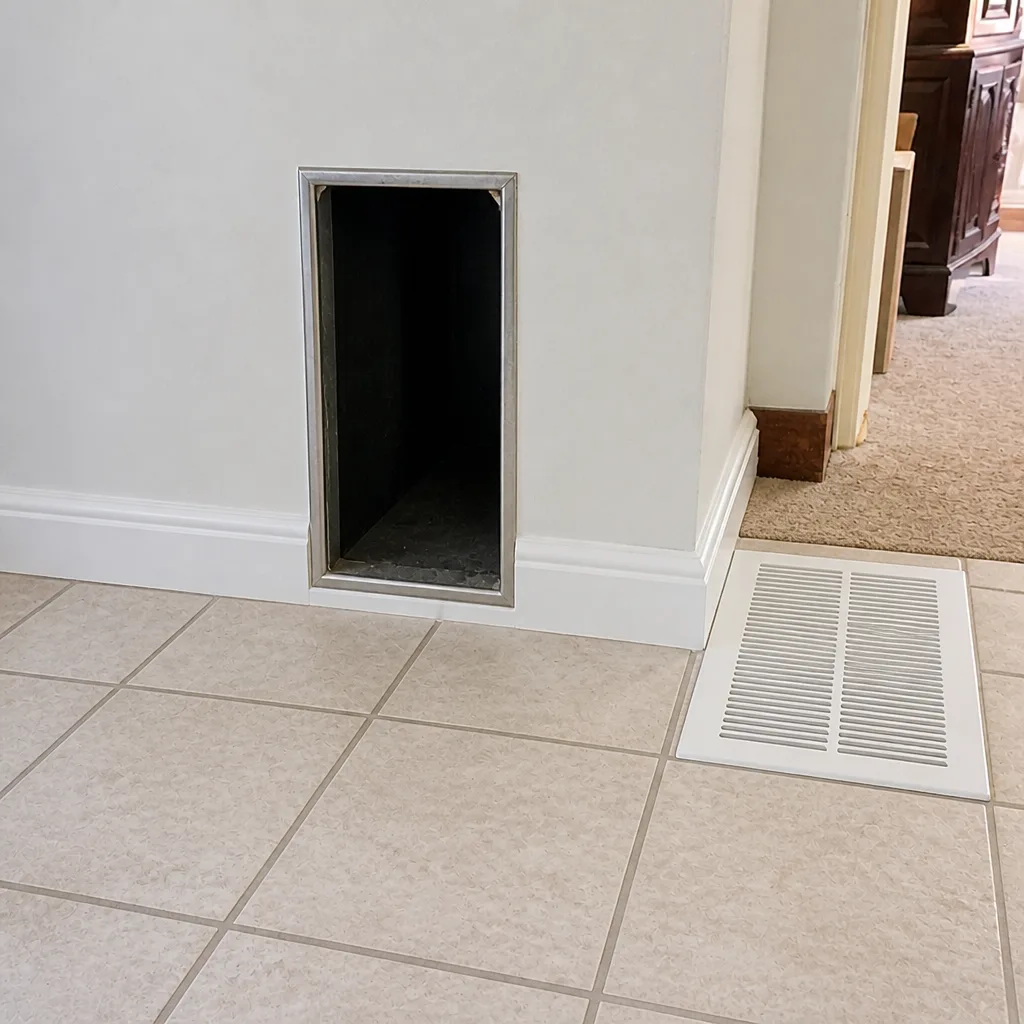 After