
Last updated November 4, 2026
 Whole-home duct cleaning
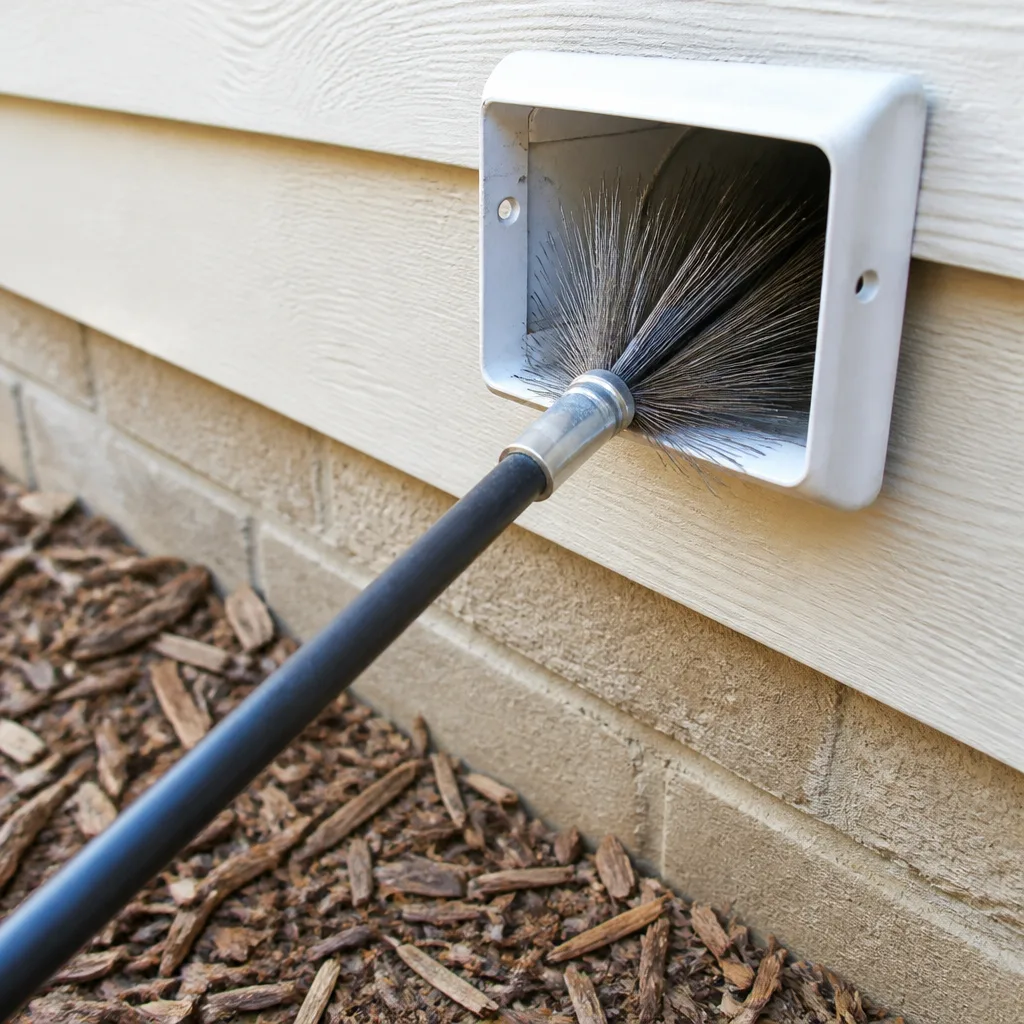 Dryer vent cleaning
 Camera inspection
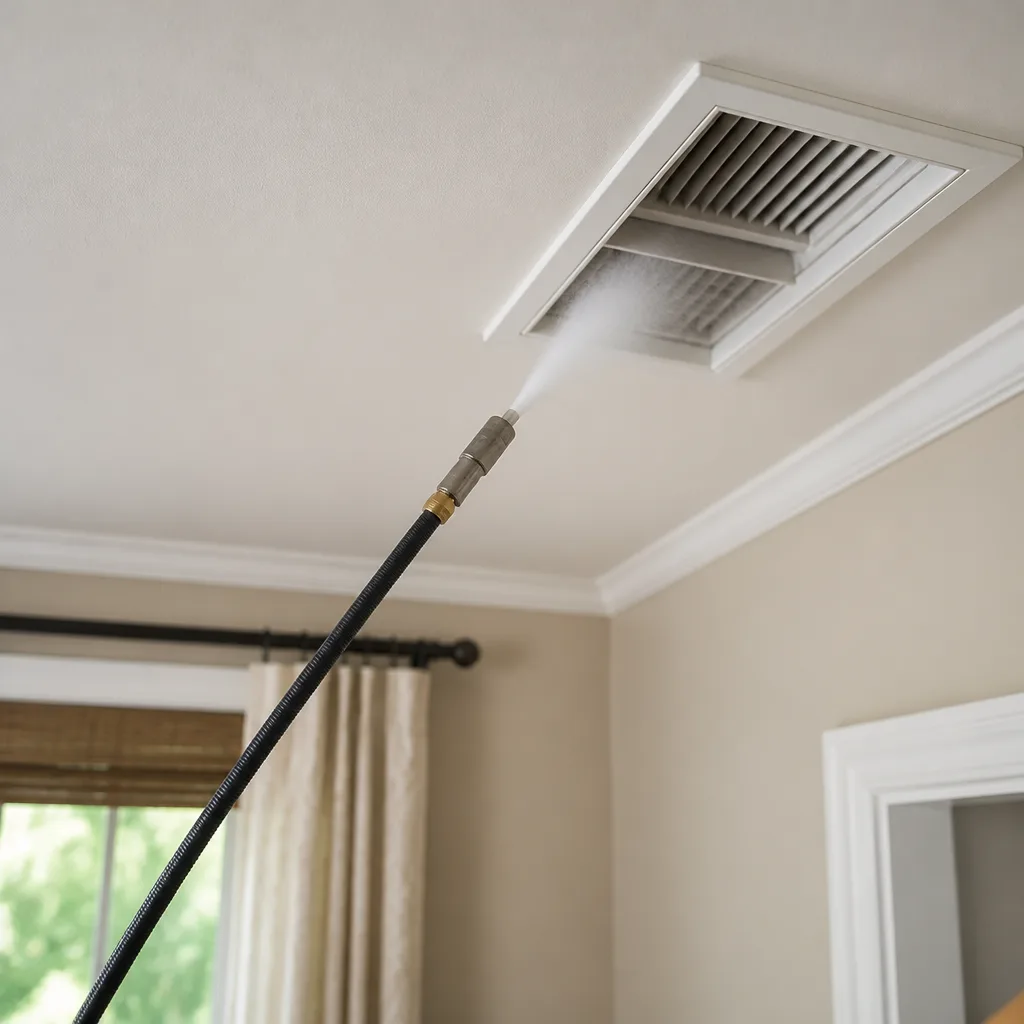 Sanitizing & deodorizing
Whole-system duct and dryer vent check with before-and-after photos - you see exactly what came out of your vents
That "$99 whole-house special" is a bait ad - the real number appears once they are in your hallway, or the "clean" is a shop-vac at the register. We photograph the inside of your ducts before and after instead.
Seasonal Air Duct Cleaning Care for Aliso Viejo: Year-Round Homeowner’s Guide
Aliso Viejo doesn’t have four seasons in the traditional sense. It has a marine season and a Santa Ana season, and each one attacks your duct system in a completely different way. Most seasonal duct cleaning advice you’ll find online was written for places with snow, freezing temperatures, and basements – none of which apply here. This guide walks you through what actually happens inside your ductwork during each part of the Aliso Viejo year, when specific contaminants load into your system, and the timing that makes maintenance genuinely useful rather than a calendar ritual. If you own a home in Aliso Viejo or manage rental property near the 73 corridor, you’ll come away knowing exactly what to watch for month by month.
Quick Answer
Seasonal air duct cleaning in Aliso Viejo works best when it follows the city’s two dominant weather patterns: the May through September marine-layer season (which drives humidity into attic duct runs and promotes biological growth) and the October through December Santa Ana season (which loads duct systems with fine particulate dust). The optimal maintenance window is January through April, when HVAC systems transition from heating to cooling load and the preceding Santa Ana season’s dust can be cleared before summer humidity sets in.
Styles & brands we work with
- Whole-home duct cleaning
- Dryer vent cleaning
- Camera inspection
- Sanitizing & deodorizing
Table of Contents
- May – September: The Marine Layer Season and Your Ducts
- October – December: Santa Ana Winds and Particulate Loading
- January – April: The Optimal Inspection and Cleaning Window
- Adjusting MERV Ratings Seasonally Without Overloading Your System
- Wildfire Smoke Protocol for South Orange County Homes
- Why Dryer Vent Cleaning Deserves Its Own Seasonal Attention
- When Duct Repair Matters More Than Cleaning
- Common Mistakes to Avoid
May – September: The Marine Layer Season and Your Ducts
From late spring through early fall, Aliso Viejo sits under the marine layer. Overnight and early-morning humidity regularly pushes past 70%, and that moisture finds its way into attic spaces where most residential duct runs live. Flexible ducts, in particular, respond to this moisture cycle.
What actually happens: warm, humid air contacts the cooler exterior surface of the duct. Condensation forms. That thin film of moisture sits on the duct material and creates exactly the environment biological contaminants prefer. Over a full marine-layer season, this doesn’t stay isolated to the outside of the duct. Supply ducts develop internal moisture where cool conditioned air meets warmer attic air inside the system.
Signs to watch for between May and September in Aliso Viejo:
- Musty smell when the AC first kicks on – not strong, but noticeable in the first 30 seconds of airflow
- Visible condensation on duct exteriors visible in the attic or on registers in upstairs rooms
- Discoloration around supply registers, particularly in rooms farthest from the air handler
- Household dust that appears slightly darker or clumpier than typical inland dust
During this season, an air duct cleaning that addresses both the mechanical removal of debris and the drying-out of the system is more valuable than a quick vacuum pass. The goal isn’t just to remove what’s already there; it’s to interrupt the moisture cycle that keeps feeding new growth. Using a Rotobrush rotary brush system for mechanical agitation matters here because it physically scrubs the duct walls rather than simply pulling loose material through a hose. Paired with Nikro HEPA-rated negative air equipment, the dislodged material is captured at the point of contact rather than blown through the living space.
For Aliso Viejo homeowners who run their AC from May onward, the marine-layer season is the time to be observant, not reactive. Note what you smell and see. The actual corrective work is often best scheduled in the drier months that follow.
October – December: Santa Ana Winds and Particulate Loading
When the Santa Ana winds arrive in Aliso Viejo, the air changes in ways you can feel. Humidity drops. Temperatures rise. And the wind, coming from the northeast, picks up dust from the inland valleys and pushes it through every gap, crack, and opening that exists along its path.
What this means for a duct system: during high-wind events, the exterior surfaces of your home take on a particulate load that has nothing to do with how well you dust. The HVAC system’s intake vents, located outside or in dusty utility areas, pull that suspended material directly into the return side. The filters catch some of it. The rest settles.
The Santa Ana season is the highest-risk period for duct contamination in Orange County for a simple reason: the wind delivers dust in concentrated bursts, while the dry air keeps that dust suspended and mobile. Unlike the marine-layer season, where the problem is biological and slow-moving, the Santa Ana season creates a mechanical loading problem. Dust accumulates by volume.
Between October and December, watch for:
- Rapid filter loading – a filter that’s visibly dirty after two weeks during calm weather may clog after a single windy weekend
- Dust accumulation on supply registers days after cleaning – the system itself is acting as a reservoir
- Increased indoor allergy symptoms that correlate with wind events, not with pollen season
- Audible debris movement inside ducts when the system cycles on – a light rustling or ticking sound
If a Santa Ana event coincides with a broader regional dust problem, the duct interior acts like a settling chamber. That dust then redistributes into the living space every time the blower runs. A Duct Cleaning Aliso Viejo service call during or just after this period addresses that accumulated load directly.
Here’s the timing consideration: cleaning during the heaviest wind weeks often makes less sense than cleaning after the peak. Do the filter maintenance during the events. Schedule the mechanical duct cleaning once the worst of the particulate loading has passed.
January – April: The Optimal Inspection and Cleaning Window
The first third of the year is the best time to have your ducts professionally evaluated and cleaned in Aliso Viejo. Not because of a calendar convention, but because of how heat and cooling loads shift during this period.
During winter, most Aliso Viejo homes run their heating systems intermittently – mornings and evenings, rarely all day. By March, the switch back to cooling begins. That transition matters because it changes how air moves through the system. Warm air rises; cool air falls. Heating cycles push air through the ducts at one temperature and humidity level. Cooling cycles produce the opposite conditions. Any material that was dried, loosened, or deposited during the previous year’s heating and Santa Ana seasons gets disturbed when cooling airflow resumes.
A January-through-April inspection also gives you a full picture of what the previous two seasons left behind: marine-layer biological material, Santa Ana dust loading, and any degradation to the mechanical integrity of the duct runs themselves.
A useful annual rhythm for Aliso Viejo:
- January: Visual inspection of accessible ductwork, registers, and the air handler
- February: Filter replacement and assessment of whether the current MERV rating still fits
- March: Professional duct cleaning and dryer vent cleaning, before cooling season starts in earnest
- April: Post-cleaning filter change and any deferred duct repair work
This sequence takes advantage of the relatively dry, stable weather that Aliso Viejo typically sees between January and April. The work gets done before the marine layer returns, which means the cleaned system starts the humid season without an existing biological load.
Adjusting MERV Ratings Seasonally Without Overloading Your System
MERV ratings measure how effectively a filter captures particles. Higher ratings mean finer filtration. But there’s a tradeoff that doesn’t get talked about enough: every step up in MERV rating adds airflow resistance, which a residential air handler may or may not tolerate.
Most Aliso Viejo homes ship with filters in the MERV 5 to MERV 8 range. That’s enough for routine household dust. During Santa Ana season, many homeowners respond by installing a MERV 11 or MERV 13 filter to catch the extra particulate. That instinct is reasonable, but the air handler has to be able to pull air through it.
The static pressure of a duct system is a fixed constraint. A filter that’s too restrictive makes the blower work harder, reduces airflow to the rooms, and can cause the evaporator coil to run colder than designed. In worst cases, that leads to coil freezing, which sends liquid refrigerant back to the compressor. That repair costs far more than a duct cleaning.
A better approach for Aliso Viejo:
- Baseline (most of the year): MERV 8 to MERV 10, replaced every 60 – 90 days. This fits most standard residential air handlers without significant static pressure loss.
- Santa Ana season (Oct – Dec): Go to MERV 11. This gives meaningful dust capture during the highest particulate-loading months. Replace monthly during active wind events.
- Marine layer season (May – Sep): Stay at MERV 8 to MERV 10. Higher-rated filters don’t address humidity-related contamination, and the restrictive filter reduces airflow during the months you need cooling most.
- Wildfire events: MERV 13 or a filter with equivalent capture, but check with an HVAC professional before running it long-term. If you have a filter upgrade installed, brands like Honeywell and Aprilaire offer options that fit standard residential configurations.
The rule of thumb: if you can hear the blower straining or rooms at the far end of the duct run stop getting adequate airflow after a filter upgrade, the filter is too restrictive. An air duct cleaning professional can measure static pressure if you want to know the actual number.
Wildfire Smoke Protocol for South Orange County Homes
When a declared air quality event brings wildfire smoke into the Aliso Viejo area, the rules change. Normal seasonal maintenance guidance goes out the window. What matters is keeping the particulate load out of the living space and protecting the occupants – especially anyone with asthma, COPD, or cardiovascular conditions.
Here’s a step-by-step protocol for a smoke event:
- Close the fresh-air intake. Many Aliso Viejo homes have an outside air damper connected to the return side. Close it. The last thing you want is actively pulling smoky outside air into the system.
- Run the fan on “ON” rather than “Auto.” This keeps air moving through the filter continuously, even when the heating or cooling isn’t cycling. Continuous filtration means more passes through the filter per hour.
- Install the highest MERV filter your system supports. MERV 13 minimum during smoke events, assuming static pressure allows. Change it as soon as the air clears.
- Don’t run exhaust fans continuously. Bathroom and kitchen exhaust fans create negative pressure indoors, which pulls outdoor air in through gaps and cracks. Run them only when needed.
- Skip duct cleaning during the event. Opening the system up while smoke particulates are still airborne means pulling that material inside. Wait until the air quality index returns to acceptable levels.
- After the event, inspect and clean. Smoke penetration into ductwork varies by home, but a system that ran continuously during a smoke event has accumulated more filterable material than normal. A professional assessment right after is prudent.
If you’ve got Honeywell or Aprilaire IAQ products installed, this is the context where they pay off. A high-quality media filter cabinet with the right filter element captures smoke particulate more effectively than a standard one-inch filter. Just remember that the blower still has to overcome the pressure drop.
Why Dryer Vent Cleaning Deserves Its Own Seasonal Attention
Dryer vents operate on a different schedule than duct systems. They accumulate lint every time the dryer runs, and that lint builds differently depending on the season.
In the marine-layer months, lint is heavier and more likely to clump. Aliso Viejo’s higher humidity means the lint fibers hold moisture, creating dense accumulations that stick to the inside of the vent rather than blowing through. In the dry Santa Ana months, lint stays light and particulate, but it can pack tightly against any bend or restriction in the vent run.
A clogged dryer vent matters for two reasons: it’s the leading cause of residential dryer fires, and it makes the dryer run longer per load, which uses more energy and cooks more lint into the drum and exhaust path. Neither is a seasonal-only problem, but both are easier to address when you know where in the year you stand.
Dryer vent cleaning in Aliso Viejo should be on an annual schedule at minimum. Homes where the dryer vent run is long, has multiple elbows, or terminates on a roof near a tree should be checked every six months. The service matters because a professional dryer vent cleaning removes the accumulated lint from the full length of the run, not just the accessible section behind the dryer.
Signs a dryer vent needs attention sooner:
- Clothes take noticeably longer to dry than when the dryer was newer
- The exterior vent flap doesn’t open fully or doesn’t stay open during operation
- Laundry room feels hotter and more humid during a drying cycle
- Burning smell from the dryer, even faint
When Duct Repair Matters More Than Cleaning
Clean ducts are only half the job. Intact ducts are the other half. That distinction gets lost in an industry that treats cleaning as the endpoint.
A duct system with leaks, disconnected joints, or damaged runs undermines every benefit cleaning provides. A clean system that pulls attic air through an open seam re-contaminates itself within weeks. A clean supply run with a gap in it leaks conditioned air into an unconditioned attic before it ever reaches the room. The cleaning gets the blame, but the real problem was structural.
This is more common than Aliso Viejo homeowners might think. Duct runs in attics here face a particular set of stressors: the marine-layer humidity we’ve already covered, the temperature swing between cool nights and hot afternoons inside enclosed attic space, and the mechanical vibration of blower start-stop cycles through the year. Over time, duct tape dries out, flex duct connectors slip, and small tears open at bends.
A useful approach during any seasonal cleaning is to treat it as an inspection opportunity. When we run a Rotobrush through a duct system, the mechanical agitation reveals weak points. If the brush catches on a seam, that seam needs attention. If negative-air equipment struggles to hold, there’s a leak somewhere pulling outside air.
That’s the logic behind offering dryer vent cleaning and air duct repair as part of the same service scope. From cleaning to repair in one call. You’re not piecing together a solution from two contractors. The technician who finds the problem fixes the problem, and the air stays clean because the system stays closed.
For Aliso Viejo homeowners, this is the difference between a maintenance visit and a durability investment. The cleaning gives you a snapshot of the system’s condition. The repair capability means that snapshot can turn into a fix on the same visit.
Common Mistakes to Avoid
- Treating duct cleaning as an every-few-years event when your home has pets or nearby construction. Dander and construction dust load ducts faster than seasonal weather alone. Homes near active development areas in Aliso Viejo or those with multiple pets should lean toward annual cleaning.
- Buying a $20 furnace filter and calling it a day. Cheap fiberglass filters catch almost nothing below 10 microns. The duct system becomes the filter, and that’s the problem you’re paying someone to clean later.
- Running a whole-house fan on a smoky or dusty day. That pulls unfiltered outside air through the entire home and into the duct system through the return registers. During Santa Ana wind events, a whole-house fan is a direct injection of dust into the living space.
- Ignoring the transition season. The weeks when Aliso Viejo shifts from heating to cooling or back are where duct issues become visible. Musty smells on the first AC cycle of the year are not random. They’re a signal.
- Assuming all duct cleaning is the same. A consumer-grade shop vac attached to a drill brush will not remove the same material load as a Rotobrush system with Nikro HEPA-rated negative air equipment behind it. Contaminants captured, not redistributed. That language exists for a reason.
- Replacing the filter right before a professional cleaning. The cleaning will dislodge material that needs to pass through the filter. Put the new filter in after the cleaning, not before.
- Skipping the dryer vent while cleaning the ducts. They’re separate systems with separate problems. Cleaning one and ignoring the other leaves a fire hazard in the exhaust path.
See the difference
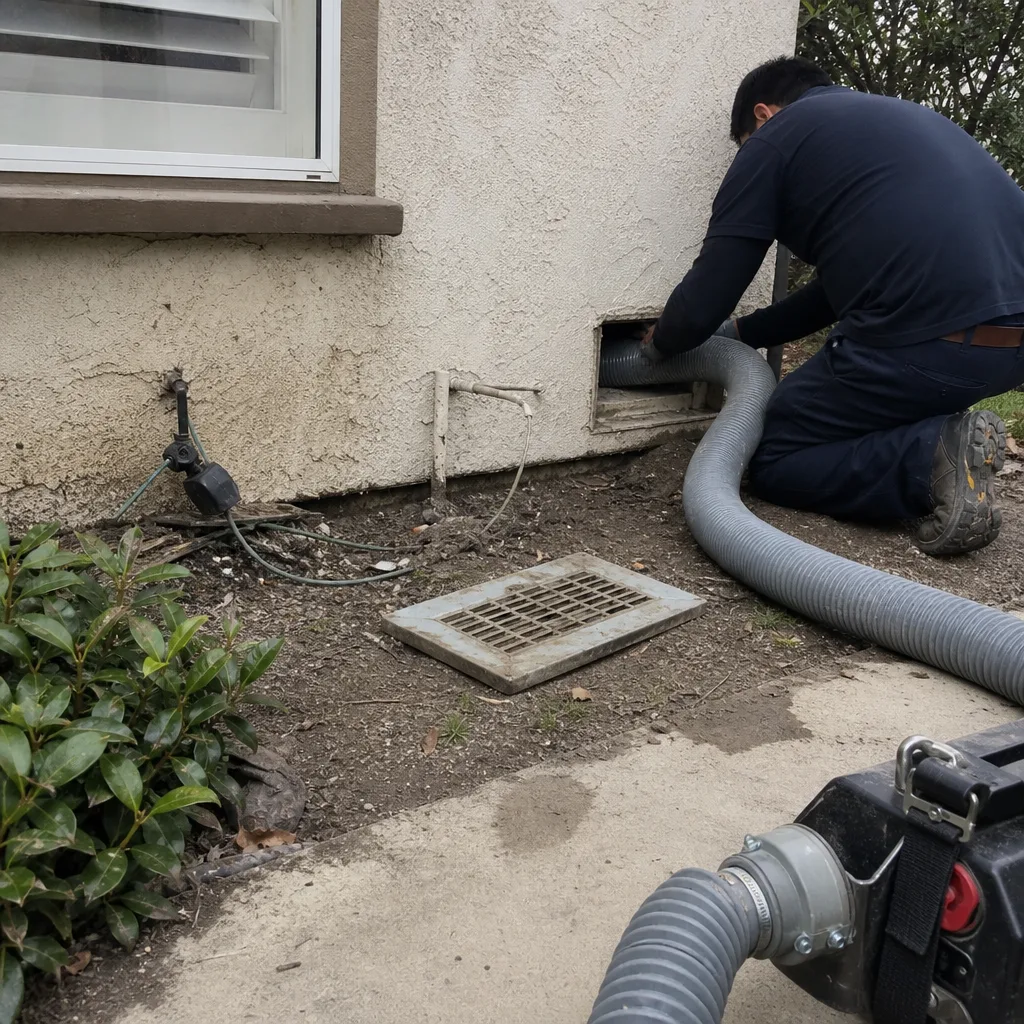 Before
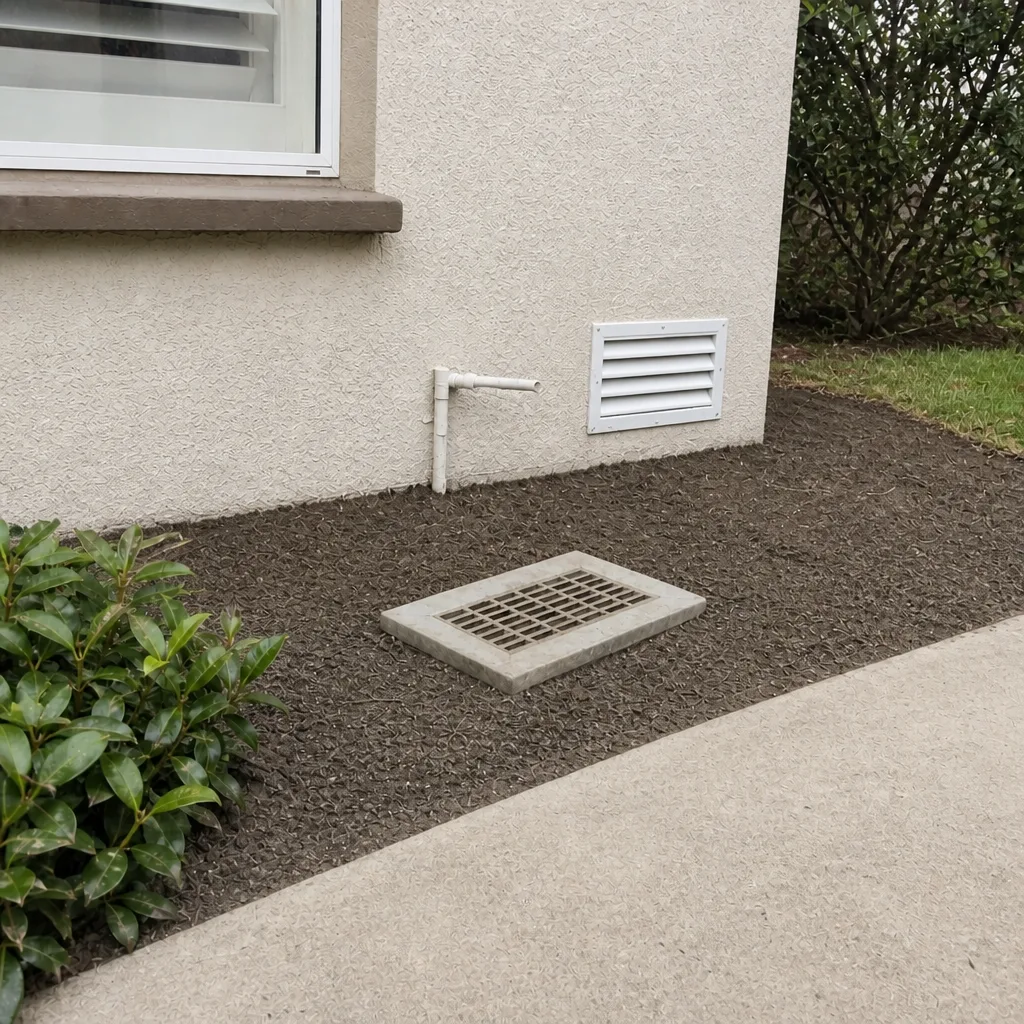 After
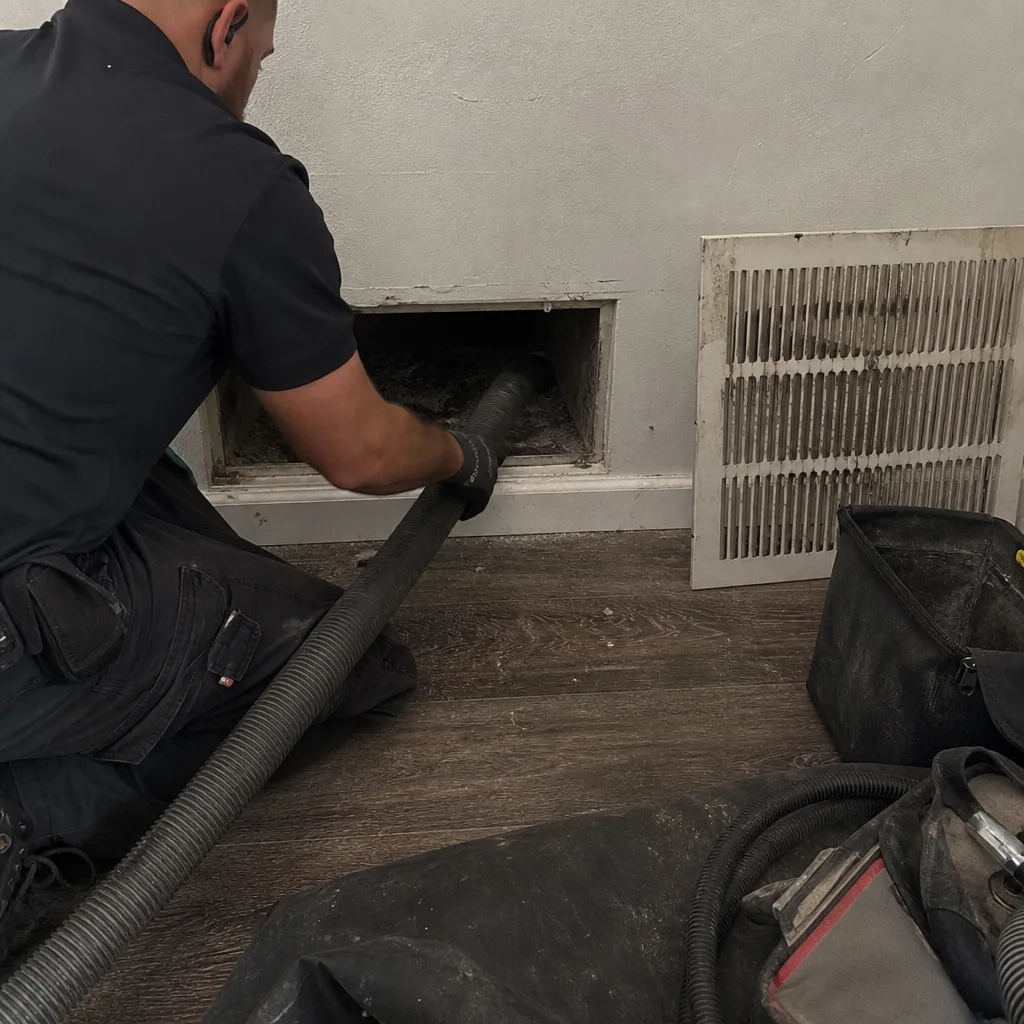 Before
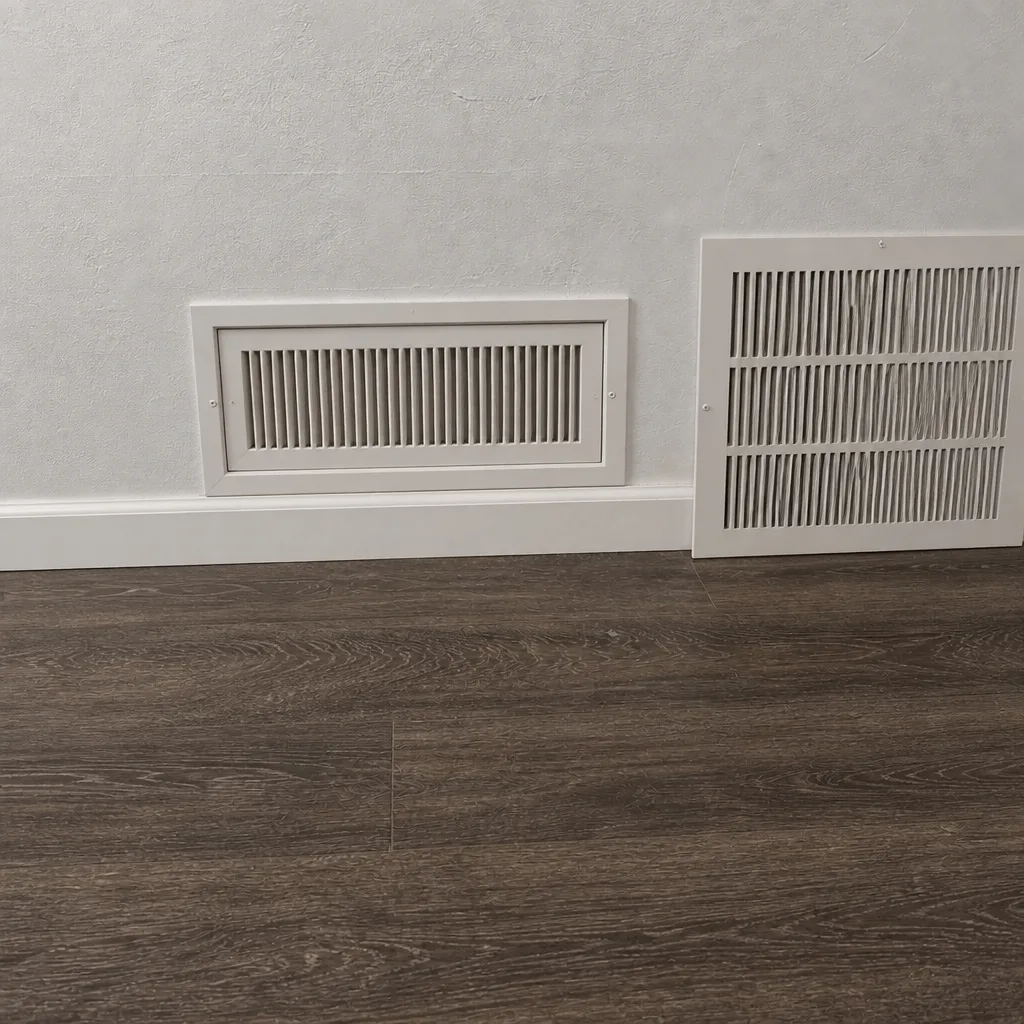 After
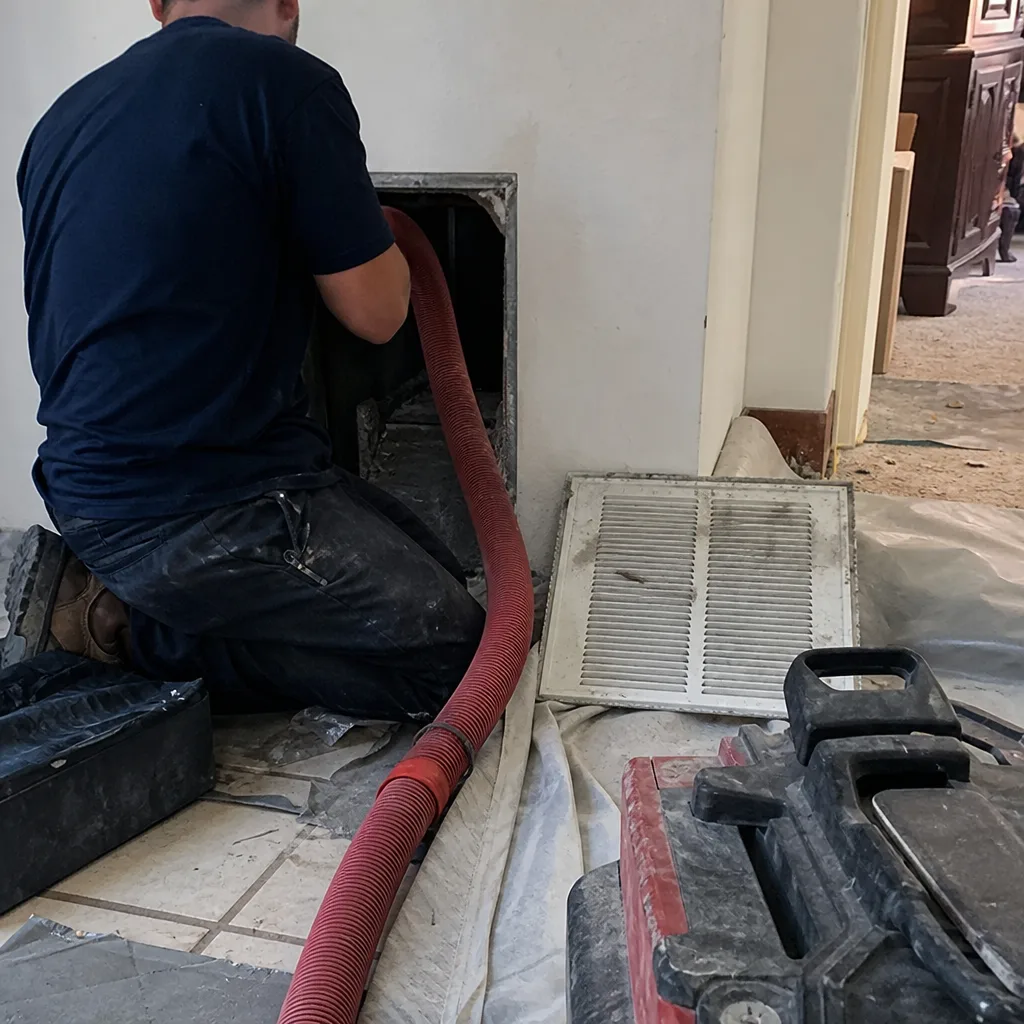 Before
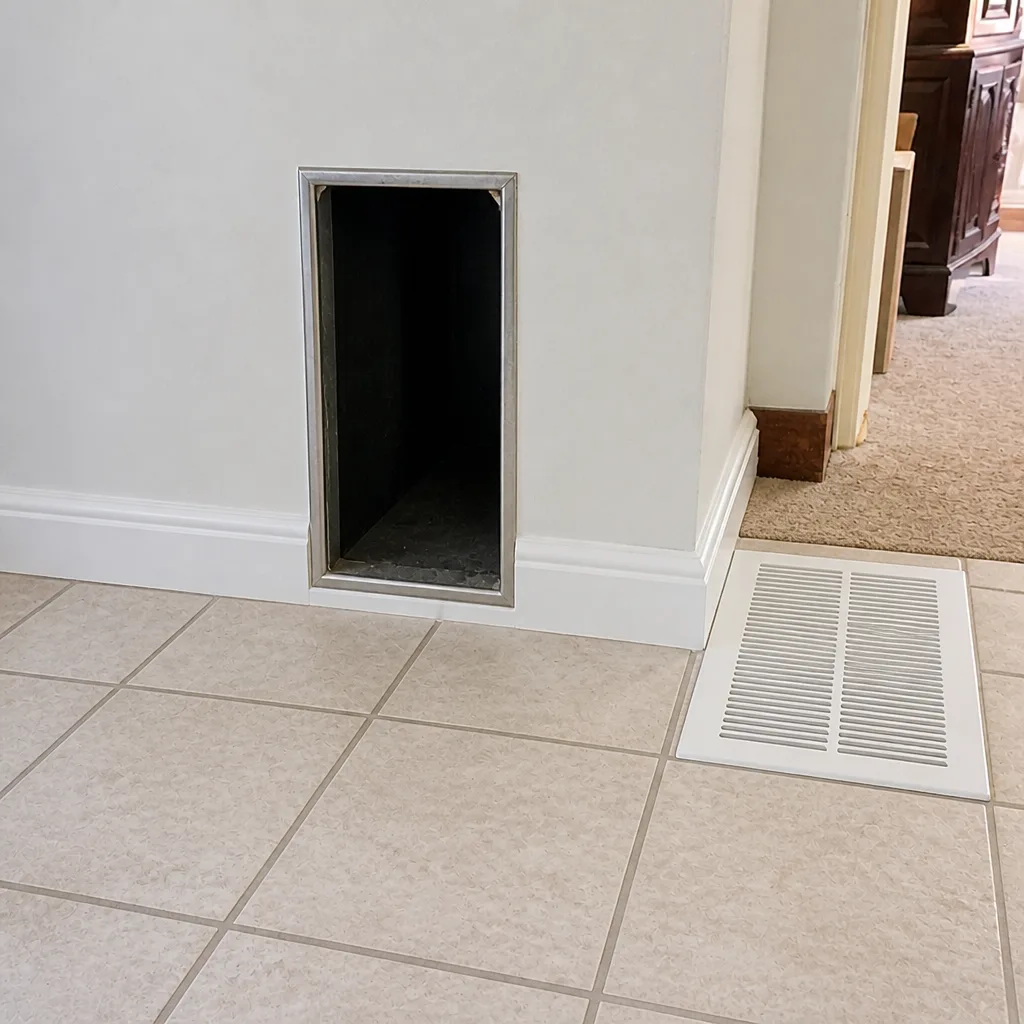 After
When to Call a Professional
You can manage filters, observe season changes, and watch for signs of trouble without professional help. But there are moments where the equipment and training matter.
Call a professional if you notice any of the following: visible mold growth inside or around duct registers, dust blowing from the registers when the system starts up, condensation forming on duct exteriors in the attic during the marine-layer months, rooms that never reach the set temperature no matter the season, or a dryer that takes more than one full cycle to dry a normal load. Any of these indicates that the problem has moved beyond what routine homeowner maintenance can address.
Routine annual cleaning can remain a homeowner-managed schedule item, but the work itself is equipment-driven. Professional-grade tools like the Rotobrush and Nikro systems deliver the mechanical scrubbing and contaminant capture that a household vacuum cannot. Guardsman protective treatments can be applied as a finishing layer after cleaning, reducing the ability of dust to adhere to duct surfaces going forward. Duct Cleaning Aliso Viejo offers free estimates in Aliso Viejo. Call (833) 693-2761. We answer 24/7. Fast dispatch from 7am to 7pm, Sunday through Friday.
Frequently Asked Questions
Most Aliso Viejo homes benefit from professional air duct cleaning every 1 to 3 years. Homes with pets, residents with allergies or asthma, recent construction nearby, or properties that sit within the particulate path during Santa Ana wind corridors should lean toward the 12-month end of that range. A January-through-April cleaning, after Santa Ana season and before the marine layer, is the most useful timing.
Yes. The May-through-September marine layer in Aliso Viejo pushes nighttime humidity above 70%, and that moisture enters attic spaces where duct runs live. The humid air condenses on cooler duct surfaces, creating damp conditions that support biological growth on and inside the duct material. Over multiple seasons, this moisture cycle contributes to musty odors, register discoloration, and degraded flex duct exteriors.
January through April is the best window for professional duct cleaning in Aliso Viejo. This period follows the dust-loading of Santa Ana season and precedes the humidity of the marine layer. The system has its highest accumulated particulate load, and cleaning it before summer humidity returns prevents biological growth from taking root in the cleaned system. Call (833) 693-2761 to schedule based on your home’s specific timeline.
Yes, but with a caveat. A MERV 13 filter captures wildfire smoke particulate far more effectively than a standard MERV 8. However, every step up in MERV rating increases resistance to airflow, and a residential air handler may or may not tolerate the added static pressure. If rooms at the far end of the duct run lose airflow after upgrading, the filter is too restrictive for your system. A filter upgrade to a Honeywell or Aprilaire media cabinet can solve this properly.
Duct cleaning removes the accumulated dust, pet dander, pollen, and other particulate that settles in the duct system and recirculates into the living space every time the blower runs. For Aliso Viejo residents whose allergies flare during the Santa Ana wind season or the spring pollen transition, cleaning the reservoir of that material out of the system reduces the total allergen load inside the home. The effect is most pronounced when combined with higher-efficiency filtration and sealed ductwork.
Ask about the equipment they use. A professional operation runs purpose-built duct-cleaning platforms like Rotobrush for mechanical agitation and Nikro HEPA-rated negative air machines for contaminant capture. Abatement Technologies containment equipment keeps dislodged material from redistributing through the home. If a company arrives with a shop vac and a basic brush kit, the mechanical removal and capture capability simply isn’t equivalent. Professional-grade equipment, not improvised gear.
The Bottom Line
Aliso Viejo’s seasonal pattern loads duct systems differently than conventional furnace-and-snow climates. The marine-layer season drives moisture into attic duct runs, promoting biological contamination. The Santa Ana season drives dust into the system at volume. January through April, when the system transitions from heating to cooling, is the window where a professional cleaning clears both season’s deposits before the cycle repeats. Filter maintenance, dryer vent cleaning, and duct repair work in parallel with those seasons. The home’s air quality depends on recognizing that two-season pattern and scheduling the work to match it, not on following a calendar designed for somewhere else.
Written by the team at Duct Cleaning Aliso Viejo, serving Aliso Viejo since 2016.