
Last updated November 4, 2026
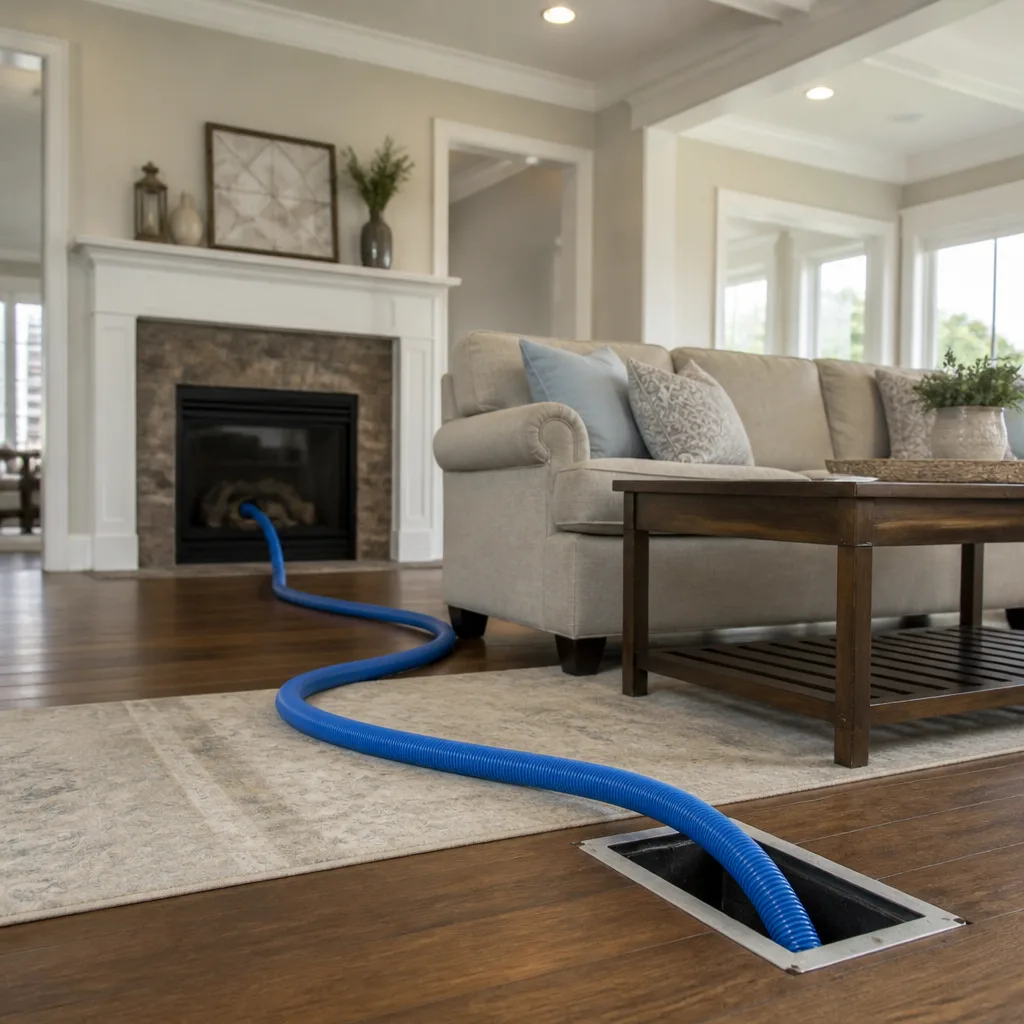 Whole-home duct cleaning
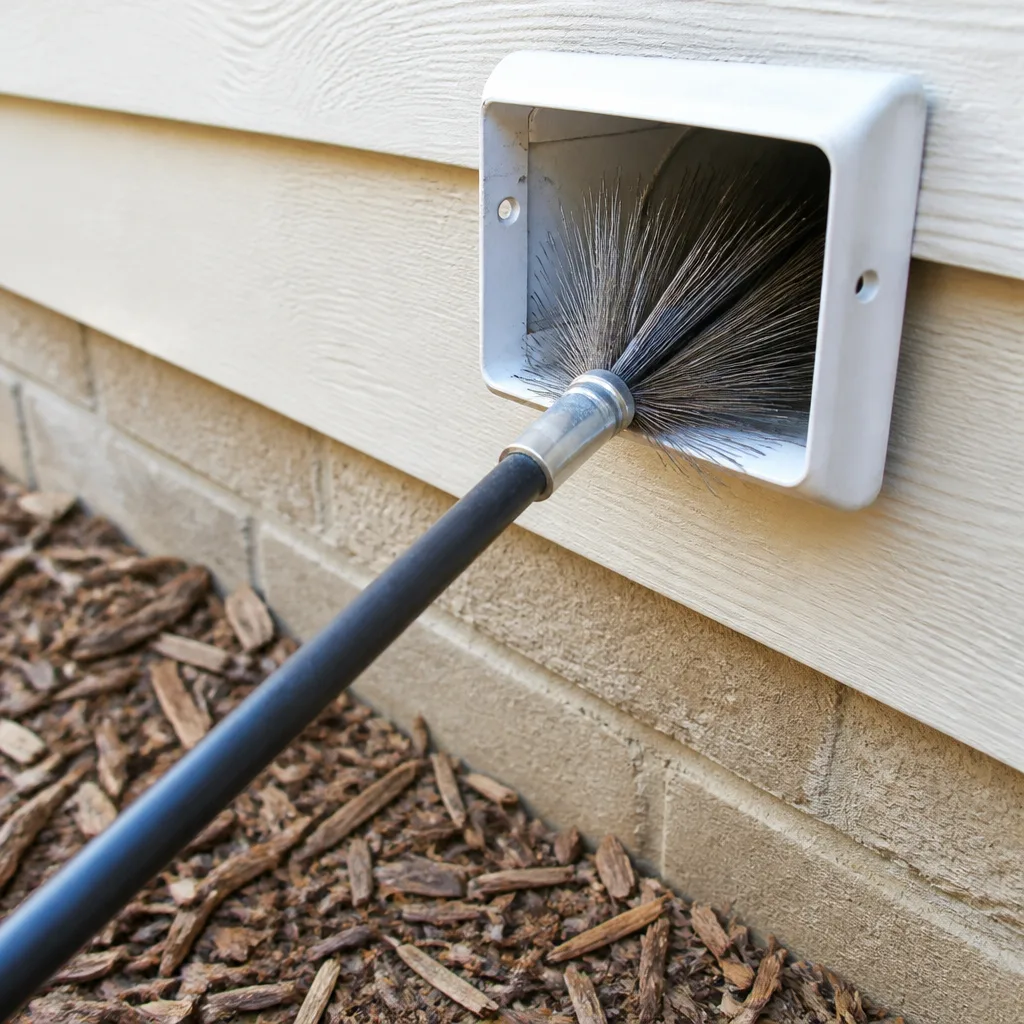 Dryer vent cleaning
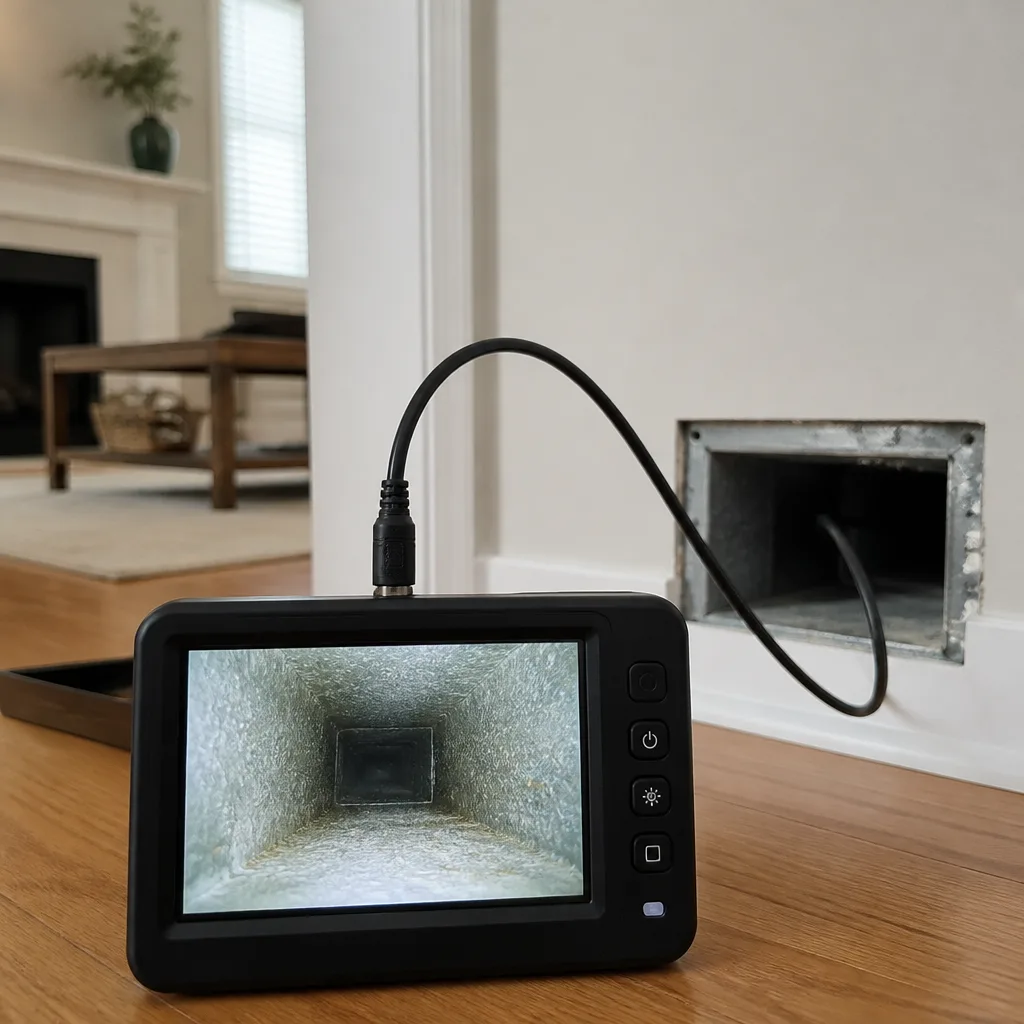 Camera inspection
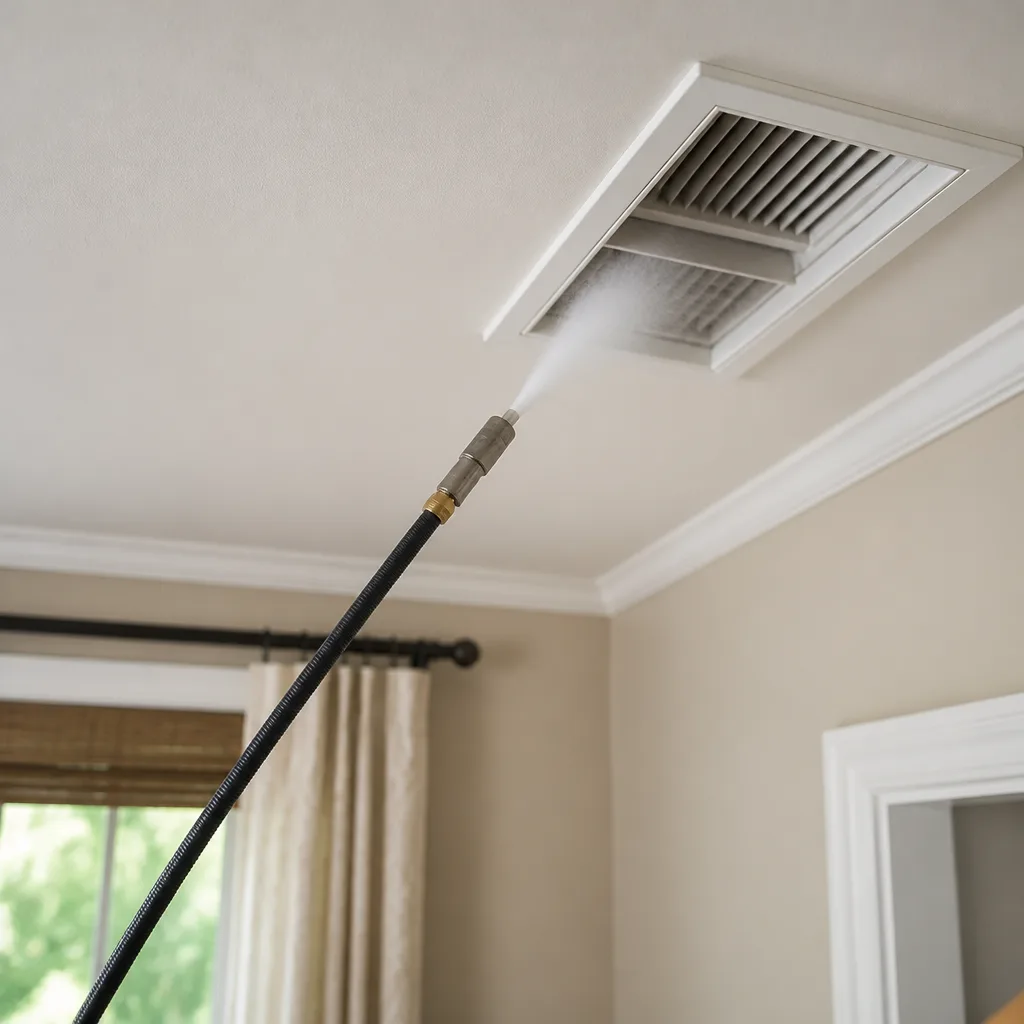 Sanitizing & deodorizing
Whole-system duct and dryer vent check with before-and-after photos - you see exactly what came out of your vents
That "$99 whole-house special" is a bait ad - the real number appears once they are in your hallway, or the "clean" is a shop-vac at the register. We photograph the inside of your ducts before and after instead.
The Complete Guide to Air Duct Cleaning in Aliso Viejo
Most national duct cleaning guides read like they were written for a house in Ohio. They talk about furnace cycles, basement returns, and winterizing. Aliso Viejo is a different place entirely. Homes here sit within five miles of the Pacific marine layer and downwind of the 2018 Woolsey and 2020 Silverado fire corridors. That means two very different contaminant types get pulled into ductwork, and they do not behave the same way. This guide explains what actually accumulates in Aliso Viejo ducts, how a proper cleaning removes it, and why the cleaning method matters more than the price.
Quick Answer
Air duct cleaning in Aliso Viejo removes built-up dust, pet dander, and particulate fallout from fires and marine air using professional-grade negative-air equipment and rotary brush agitation. A legitimate cleaning follows source-removal standards where contaminants are extracted to a contained vacuum outside the living space, not blown around the home. For homes in Aliso Viejo, the real question is whether the ducts are also intact, because flex duct runs in 1990s and 2000s tract construction are prone to sagging, kinking, and disconnection that make cleaning alone a short-term fix.
Styles & brands we work with
- Whole-home duct cleaning
- Dryer vent cleaning
- Camera inspection
- Sanitizing & deodorizing
Table of Contents
- Why Aliso Viejo is Different
- What Actually Collects in Aliso Viejo Ducts
- Source Removal vs. Blow-and-Collect: Why the Method Matters
- The Cleaning Process, Step by Step
- What Inspection Should Cover Before Work Begins
- Why Duct Repair and Cleaning Belong in the Same Visit
- Post-Cleaning Verification: Proof the Job Was Done
- How Often and What It Costs in Aliso Viejo
Why Aliso Viejo is Different
Aliso Viejo sits in a valley position relative to the Pacific, close enough that the marine layer rolls through on a regular schedule. That moisture does not stay outside. It gets drawn into return ducts every time an HVAC system cycles. In rigid metal ducts, that humidity tends to stay on the surface and dry out when the system runs. In flex duct, which is what most 1990s and 2000s Aliso Viejo tract homes have in abundance, moisture behaves differently. The inner liner of flex duct is a textured polymer surface. Condensation settles into that texture and holds there longer than it does on sheet metal. That creates a microenvironment where dust particles stick, bond, and eventually form a film that does not come off with a simple vacuum pass.
The second factor is seasonal and increasingly familiar: wildfire smoke. Aliso Viejo is downwind of the corridors that carried smoke from the 2018 Woolsey Fire in the Santa Monica Mountains and the 2020 Silverado Fire in the Cleveland National Forest. Smoke particulate is not ordinary household dust. It is finer, often sub-micron, and it carries combustion byproducts. Homes that ran their HVAC systems during those smoke events pulled that particulate into duct interiors. Without cleaning, it remains in the system and can recirculate every time the blower kicks on.
These two contaminants, moisture-driven biological films and fine smoke particulate, require different mechanical approaches. A guide that treats duct cleaning as one uniform task is not describing what Aliso Viejo homes actually need.
What Actually Collects in Aliso Viejo Ducts
Here is the honest inventory of what a duct inspection in Aliso Viejo typically finds, in order of frequency.
- Construction debris in ducts of homes built in the 1990s and 2000s. Drywall dust, sawdust, and sometimes paint chips settled in duct runs before the original owner ever moved in. Many systems have never been cleaned since construction.
- Pet dander and hair, which compacts around return grilles and the first few feet of return duct, especially in homes with dogs or cats and central returns.
- Fine dust and soil particulate tracked in from the surrounding hillside terrain. Aliso Viejo’s topography and open space corridors mean fine silt moves through doors and windows and ends up in the system.
- Smoke particulate from regional fires. This is the contaminant most homeowners never see because it is too fine to be visible as a layer, but it leaves a gray residue on duct surfaces and registers immediately on a white-glove test.
- Microbial film in flex duct sections that have experienced repeated condensation cycles. This is the marine layer’s contribution. It is not mold remediation territory in most cases, but it requires proper agitation and extraction, not a passive vacuum.
The point is not to alarm anyone. It is to explain that Aliso Viejo ducts carry a specific contaminant profile that differs from inland desert homes or cooler coastal properties. The cleaning approach has to account for that profile.
Source Removal vs. Blow-and-Collect: Why the Method Matters
The duct cleaning industry has two dominant methods, and the difference determines whether a homeowner gets a real result or a show.
Source removal is the NADCA-recognized standard. It works by placing the entire duct system under negative pressure using a HEPA-rated vacuum unit connected to the supply and return plenums. Then mechanical agitation tools, typically rotary brushes or air whips, are inserted through access points to dislodge debris from duct walls. The dislodged material is pulled toward the vacuum and captured in contained filtration. Nothing recirculates into the home.
Blow-and-collect is cheaper and faster. It typically means a technician creates positive pressure inside the ducts with compressed air and either uses a portable vacuum at one register or sometimes just opens a window. Debris gets loosened, but a meaningful portion of it ends up distributed through the living space or blown back into rooms through registers. It looks like cleaning happened because dust clouds move around. What it leaves behind is measurable.
In Aliso Viejo’s specific contaminant profile, blow-and-collect fails particularly badly on two fronts. First, it does not remove the adhered film that forms in condensation-prone flex duct. Second, it can aerosolize fine smoke particulate that had settled, putting it back into the breathing zone. This is why a professional-grade setup matters: equipment built for source removal includes negative-air capability. Brands like Nikro and Abatement Technologies build units specifically designed to maintain negative pressure and capture at the point of extraction. A shop vac with a long hose does not.
The Cleaning Process, Step by Step
A legitimate air duct cleaning in Aliso Viejo follows a defined sequence. Here is what that sequence looks like when performed correctly.
- System inspection and pressure test. Before any cleaning begins, the technician should inspect supply plenums, return plenums, accessible flex duct runs, and register locations. In Aliso Viejo’s 1990s and 2000s housing stock, this step frequently reveals kinked flex connections and sagging sections that would trap debris during cleaning. The inspection determines access point placement and identifies repair issues in the same visit.
- Supply and return sealing. All registers are covered and sealed except the ones actively being worked. This maintains the negative-pressure field inside the duct system so that loosened debris only travels one direction: toward the contained vacuum.
- Negative-air connection. A HEPA-rated negative-air machine, such as a Nikro unit, is connected to the system. This creates continuous airflow toward the collection point. Abatement Technologies containment units are used to isolate work areas and prevent cross-contamination of cleaned and uncleaned sections.
- Mechanical agitation. A rotary brush system, such as Rotobrush equipment, is fed through access points in both supply and return sides. The brush head spins against duct walls to break loose adhered dust, pet dander, and the moisture-bonded film that defines Aliso Viejo’s coastal-adjacent contaminant profile.
- Air washing of branch runs. Smaller flex ducts get compressed-air agitation from the register side, pushing loosened material toward the main trunk line where negative pressure draws it out. This is done sequentially so that no section of ductwork is skipped.
- Plenum cleaning. Return and supply plenums collect the most visible dust because they are directly connected to the blower. They get hand-cleaned and vacuumed after duct branch runs are complete.
- Filter check and replacement advisory. The technician should inspect the current filter and note whether it is appropriately sized and rated. If a homeowner wants better filtration going forward, Duct Cleaning Aliso Viejo also carries Honeywell and Aprilaire products that can be installed post-cleaning for improved ongoing filtration.
- Post-cleaning walkthrough. With the system running, each register should show clear airflow and no visible dust emission. If before-and-after photos were part of the scope, they should be reviewed at this point.
What Inspection Should Cover Before Work Begins
Most homeowners never see the inside of their ducts before cleaning starts. That is a mistake. A pre-cleaning inspection does not need to be elaborate, but it should include several specific checks that are particularly relevant in Aliso Viejo’s building stock.
First, the inspection needs to check for visible flex duct failure. Aliso Viejo’s 1990s and 2000s homes frequently have flex duct runs in attics where builders pulled runs through tight truss spaces. Over time, those runs sag between supports. A sag of a few inches is not the end of the world. A sag that creates a sharp kink or a disconnection at a collar means the duct is no longer delivering air to the register. Cleaning a disconnected duct is pointless, and worse, it can hide the problem because the register still may feel like it is moving air if the duct is partially connected. The inspection catches this before any cleaning money is spent.
Second, the inspection should note whether accessible duct sections are rigid metal or flex. The marine layer humidity pattern in Aliso Viejo affects these differently. Flex duct with condensation staining on the outer jacket is a signal that the inner liner may have accumulated a stuck-on film. Metal ducts can develop surface rust but are easier to mechanically clean. Knowing the mix in the home determines the agitation approach.
Third, the inspection should verify that both supply and return sides will be cleaned. Some companies only clean supplies because returns are harder to access. In a properly balanced system, both sides carry moving air. Cleaning only one side means contaminated air from the return side gets pulled through a freshly cleaned system and redistributed.
Why Duct Repair and Cleaning Belong in the Same Visit
Clean ducts are only half the job. Intact ducts are the other half. In Aliso Viejo, this is not a theoretical statement. The housing stock makes it predictable that a meaningful percentage of homes will have at least one duct integrity issue when inspected.
Here is the problem with scheduling repair and cleaning as separate visits. If a duct run has a disconnected collar or a split seam, cleaning that system while it is under negative pressure pulls attic air into the duct. Attic air in Aliso Viejo in summer is hot and dust-laden. In winter, it carries the moisture signature of the marine layer. A system cleaned in that condition gets contaminated before the technician packs up. Then the homeowner schedules a repair visit later, and by that time the duct needs cleaning again. It is a loop that wastes money.
When a company offers air duct cleaning and air duct repair as core services under one roof, the visit can proceed in the right order. Inspection identifies integrity failures. Repairs seal and reconnect before cleaning begins. Then the cleaning removes the accumulated contamination from a closed system. From cleaning to repair in one call, as it should be. This also eliminates the finger-pointing that happens when a cleaning company blames an HVAC contractor for the disconnected duct and the HVAC contractor blames the cleaning company for the dirty register.
Post-Cleaning Verification: Proof the Job Was Done
One of the most common questions from Aliso Viejo homeowners is some version of: how do I know the cleaning was actually done? It is a fair question. Ducts are hidden by design, and most people will never look inside them after a cleaning.
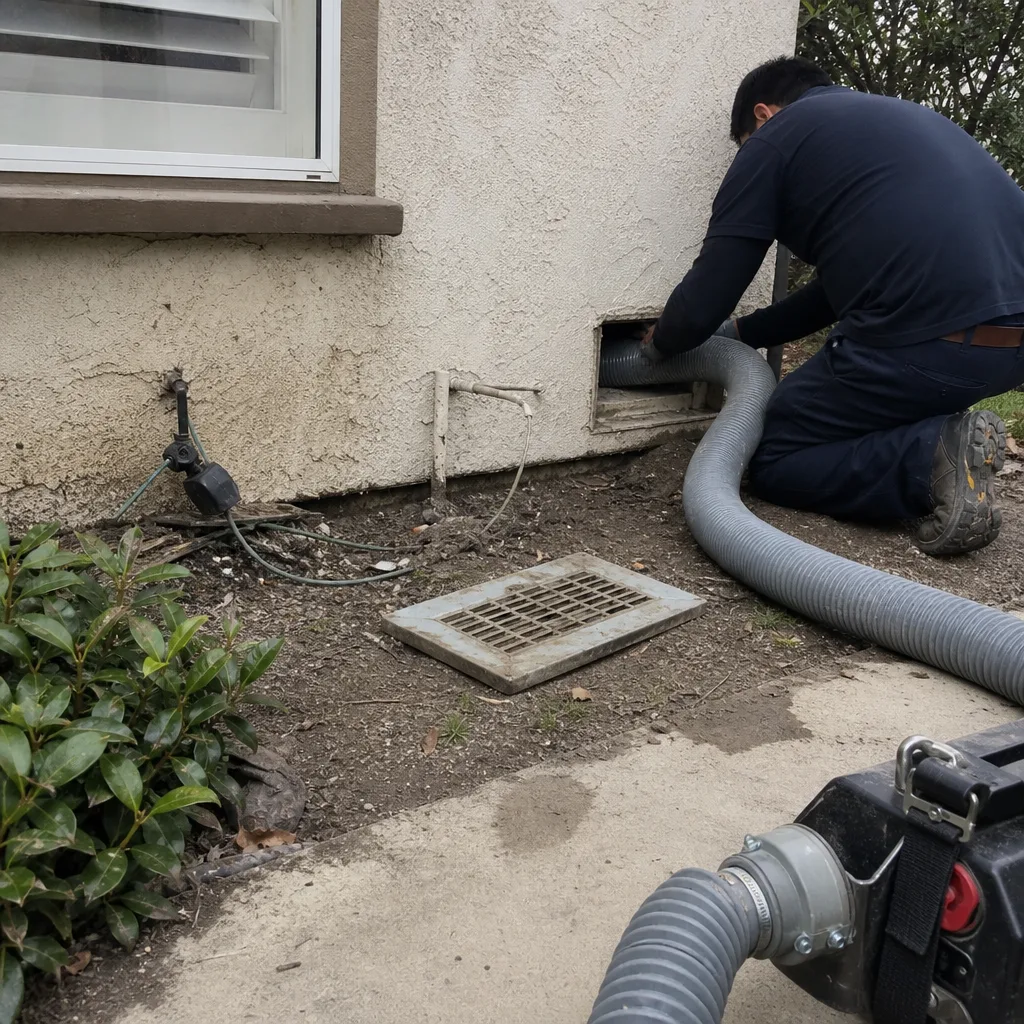
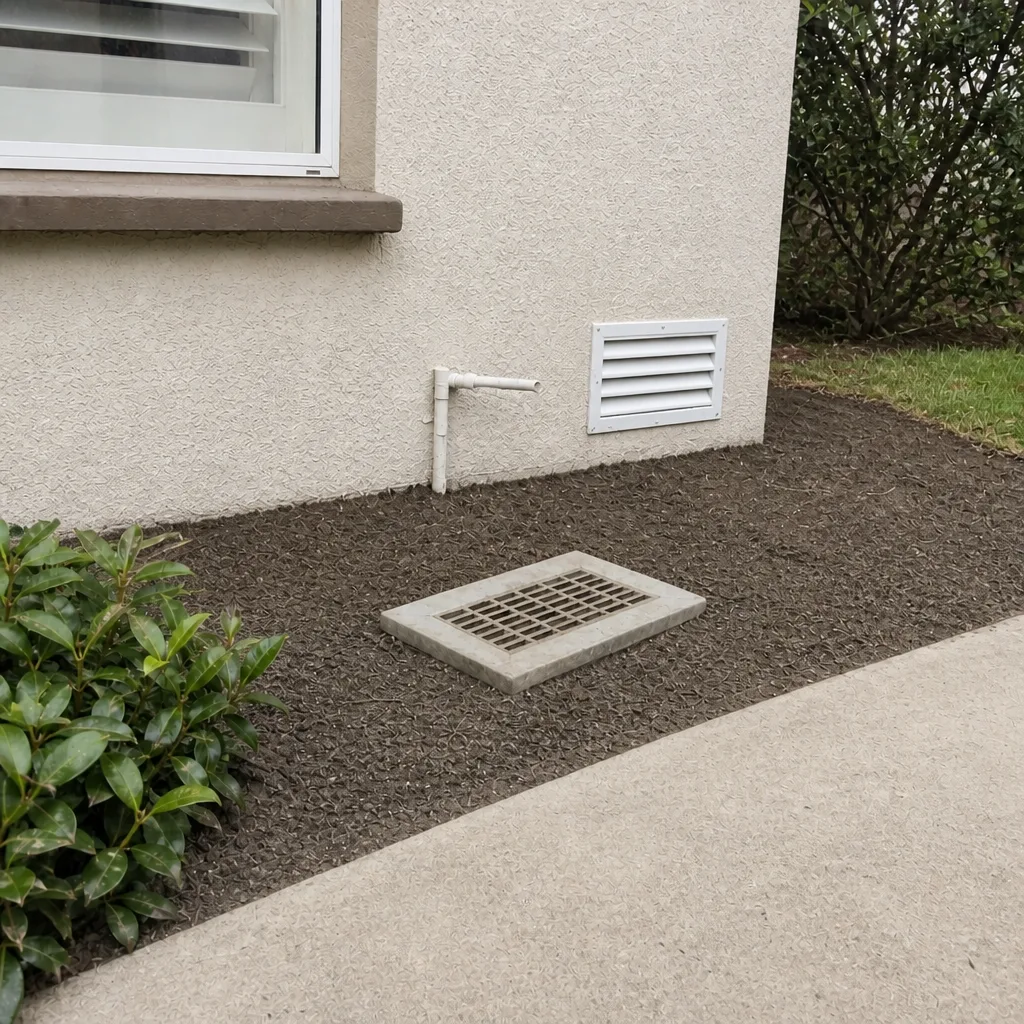
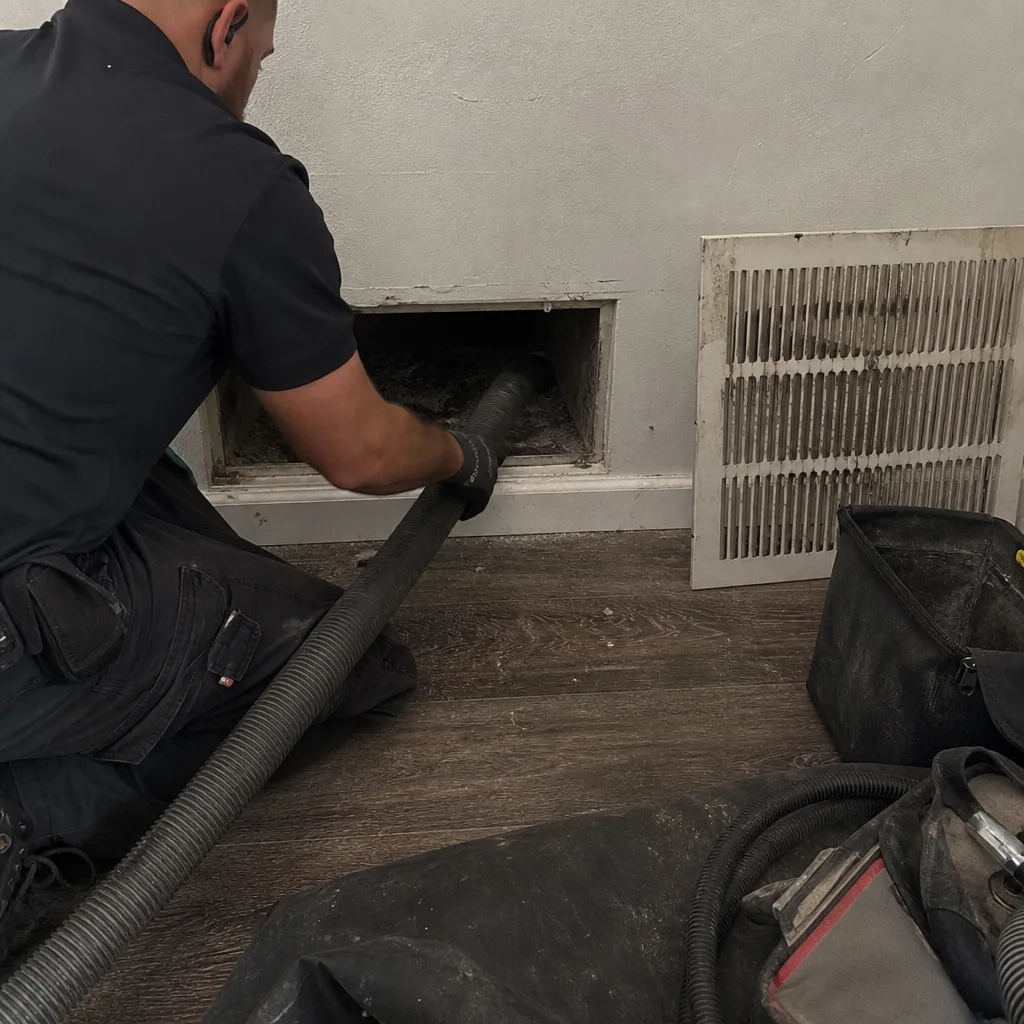
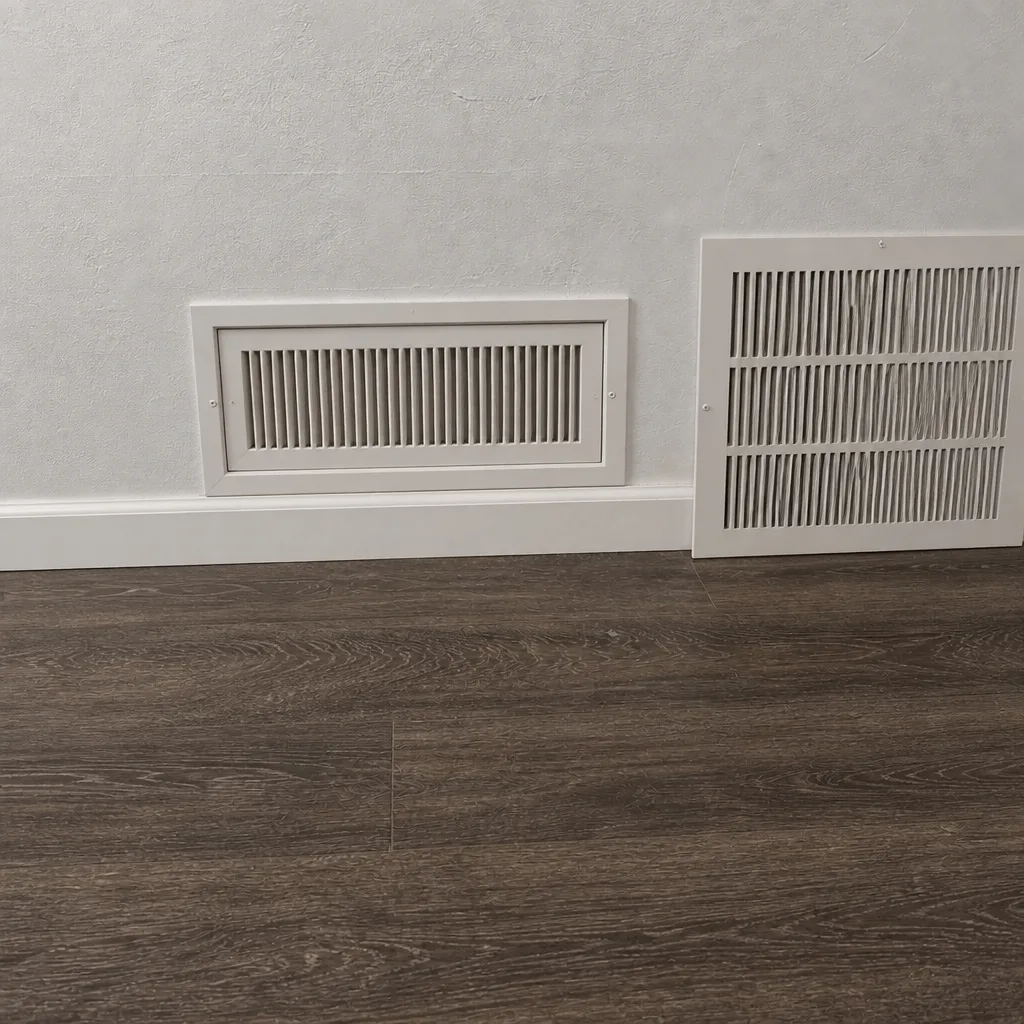
A legitimate post-cleaning verification should include three components. First, before-and-after photos of the main trunk lines and plenums. Any professional with the right equipment can access these areas and photograph them. If a company claims they cannot provide photos, that is a signal.
Second, a visible airflow check at each register. After cleaning, airflow should be noticeably strong at every register in the home. If certain rooms have always been weak, and they still are after cleaning, either the duct run is compromised or the system has a balancing problem. A professional should be able to explain which it is, not shrug.
Third, an offer to run the system with the homeowner present and show that no visible dust is being ejected from registers. This is not a perfect test, but it catches the worst outcomes. Some companies also use particle counters on request to measure particulate levels in the air stream before and after. If a Guardsman protective treatment is applied after cleaning, that should be documented as well.
How Often and What It Costs in Aliso Viejo
Most homes in Aliso Viejo benefit from air duct cleaning every three to five years. Homes with multiple pets, residents with allergy or asthma sensitivities, or recent wildfire smoke exposure are candidates for shorter intervals. If a home went through the 2018 or 2020 fire seasons with the HVAC system running and never had ducts cleaned afterward, that is a specific case where cleaning now makes sense.
As for cost, the honest answer is that Aliso Viejo pricing varies by system size, number of returns, accessibility, and whether repairs are needed in the same visit. Most single-family homes fall into an estimated range of $450 to $850 for a full system cleaning with negative-air equipment. Homes with multiple systems, very long runs, or extensive flex duct damage will run higher. A written estimate should set the final price before work begins. Cheaper quotes are almost always blow-and-collect pricing. When a quote seems too low, ask what equipment they deploy and whether they clean both supply and return sides.
Common Mistakes to Avoid
- Hiring on price alone. A $99 group coupon for duct cleaning in Aliso Viejo is inevitably a blow-and-collect operation that will leave half the contamination in the system. The price is low because the equipment and time investment are also low.
- Skipping the pre-cleaning inspection. In Aliso Viejo’s 1990s and 2000s tract homes, disconnected and sagging flex ducts are common enough that cleaning without inspection is self-defeating.
- Allowing cleaning of supply ducts only. Return ducts carry the air back to the blower. If they are not cleaned, the whole system is re-contaminated on the first cycle.
- Replacing the filter before cleaning instead of after. The cleaning process dislodges debris that will be caught by the filter. Put a fresh filter in after the job is done, not before.
- Ignoring dryer vent cleaning as a companion service. Homes in Aliso Viejo accumulate lint in dryer vents just as surely as in the HVAC system. A dryer vent cleaning addresses a different system, but it is part of the same indoor air quality picture, and it is a fire-safety issue on its own.
- Accepting a cleaning with no photos. If a company cannot show before-and-after images of your own ducts, there is no reason to believe the interior surfaces were touched.
- Deferring repair. A disconnected duct in an Aliso Viejo attic re-contaminates the system at a rate that makes frequent re-cleaning necessary. Repair is not optional in that scenario; it is the only way cleaning lasts.
See the difference
 Before
 After
 Before
 After
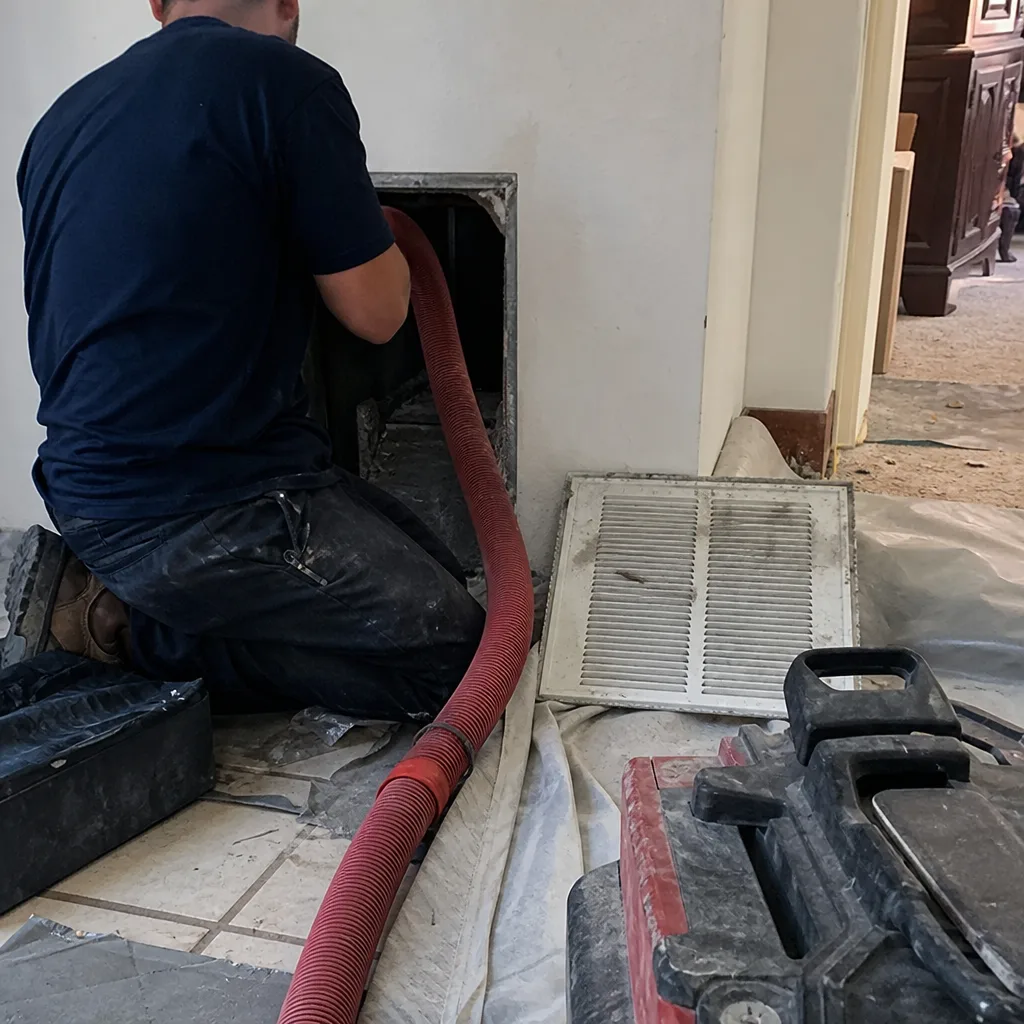 Before
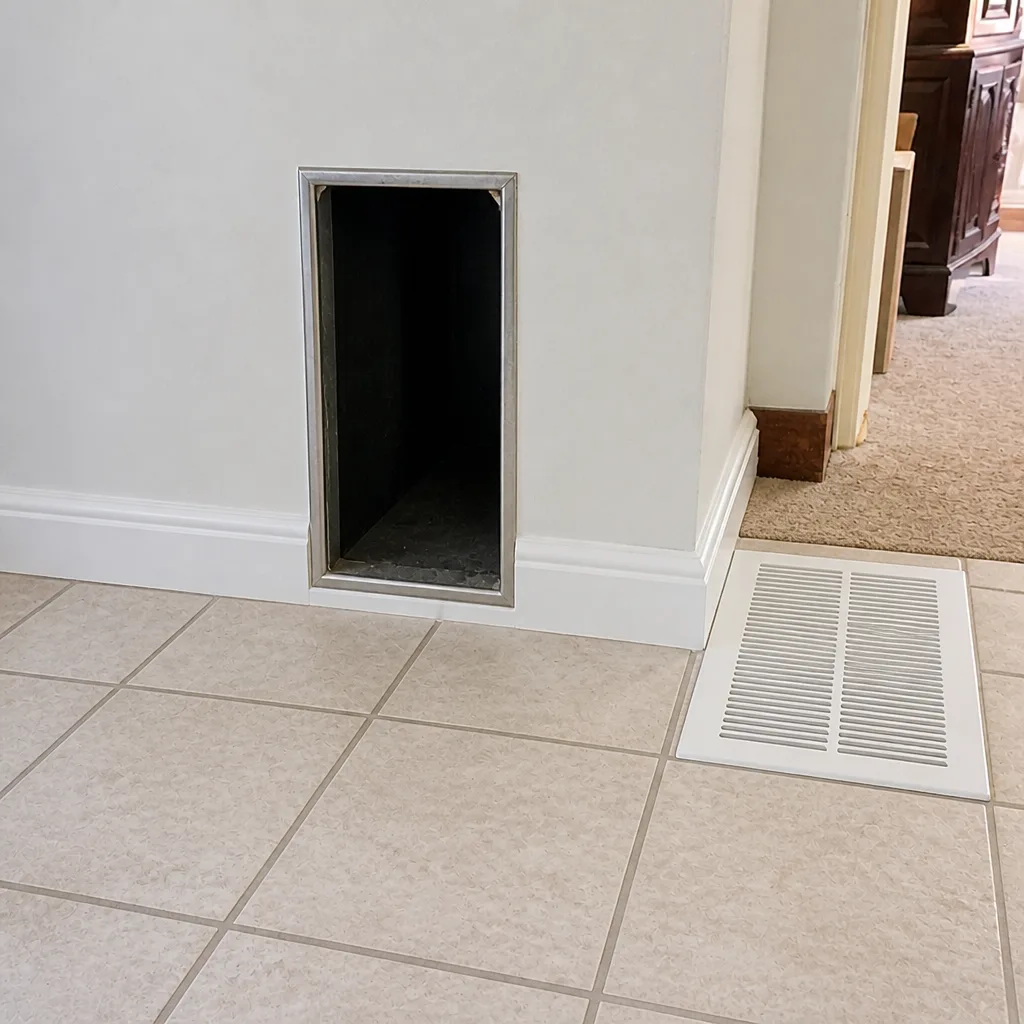 After
When to Call a Professional
Call a duct cleaning professional if your registers are visibly dusty or blowing dust when the system starts, if your home has been through wildfire smoke events with the HVAC running, if you have never had ducts cleaned in a home built in the 1990s or 2000s, or if certain rooms have consistently weak airflow despite filter changes and register cleaning. Also call if you have family members with unexplained allergy symptoms that worsen when the system runs. Duct Cleaning Aliso Viejo offers free estimates in Aliso Viejo. Call (833) 693-2761. We answer 24/7. Fast dispatch from 7am to 7pm, Sunday through Friday.
Frequently Asked Questions
Most single-family homes in Aliso Viejo fall into an estimated range of $450 to $850 for a full system cleaning with negative-air equipment and both supply and return sides cleaned. The exact price depends on system size, number of registers, accessibility, and whether repairs are included. Get a written estimate before work starts, and be wary of quotes far below this range. Call (833) 693-2761 for a free estimate for your specific system.
Every three to five years is a reasonable interval for most Aliso Viejo homes. Homes with multiple pets, allergy or asthma sensitivities, recent wildfire smoke exposure, or construction history should consider shorter intervals. A home that ran its HVAC system through the 2018 or 2020 fire seasons and has never been cleaned since should be cleaned now.
Cheaper quotes almost always mean the company is using blow-and-collect methods instead of source-removal cleaning. Blow-and-collect uses positive air pressure to loosen debris and captures only a fraction of it. The rest blows into the living space or stays in the ducts. Source-removal cleaning with negative-air equipment and rotary brush agitation takes longer and costs more because it actually removes the contaminants.
Ask for before-and-after photos of your own duct interiors and plenums. A professional should also be able to demonstrate clear airflow at every register after cleaning. Some companies offer particle counter readings on request. If a company cannot provide visual proof of the work inside your ducts, treat that as a red flag. Call (833) 693-2761 to talk through what verification looks like on your system.
Yes. The marine layer brings regular humidity cycles that settle moisture on the inner liners of flex duct. That moisture bonds dust particles into a film that does not come off with passive vacuuming. It requires mechanical agitation. This is one reason the cleaning method matters more in Aliso Viejo than in drier inland climates.
Yes, and you should. A duct system with disconnected collars, sagging runs, or split seams pulls attic air into the system. Cleaning it before repairing it means the system gets re-contaminated immediately. When a company offers both cleaning and repair as core services, the inspection identifies failures, repair seals them, and cleaning proceeds on an intact system. That is the right order.
The Bottom Line
Air duct cleaning in Aliso Viejo is a real service with real outcomes when performed correctly. The marine layer adds a moisture-driven contaminant profile, and wildfire seasons add fine particulate that most national guides never address. The method matters: source-removal cleaning with negative-air equipment removes what blow-and-collect leaves behind. Duct integrity matters just as much, especially in the flex-duct-heavy homes that define Aliso Viejo’s 1990s and 2000s building stock. The smart approach is inspection, repair where needed, thorough cleaning, and verification with photos and airflow checks. That is what a professional result looks like.
Written by the team at Duct Cleaning Aliso Viejo, serving Aliso Viejo since 2016.